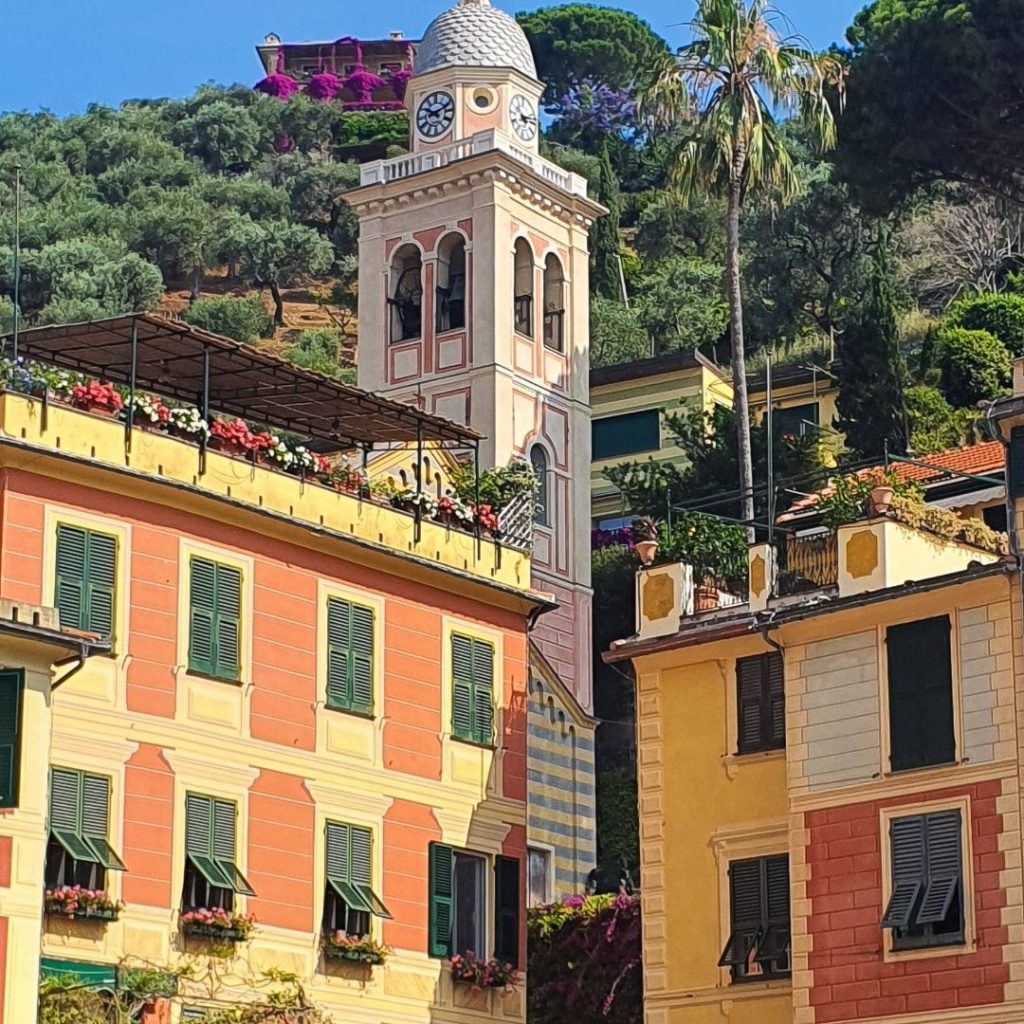
Portofino is the sort of place that looks almost suspiciously perfect. A crescent harbour painted in soft pastels, fishing boats replaced by polished yachts, and an atmosphere that suggests everyone arrived knowing exactly where to stand for the light.
And yet, beneath the gloss, there is real substance: Roman origins, monastic history, protected landscapes, and a village so small it can be walked in minutes but understood properly only if you slow down.
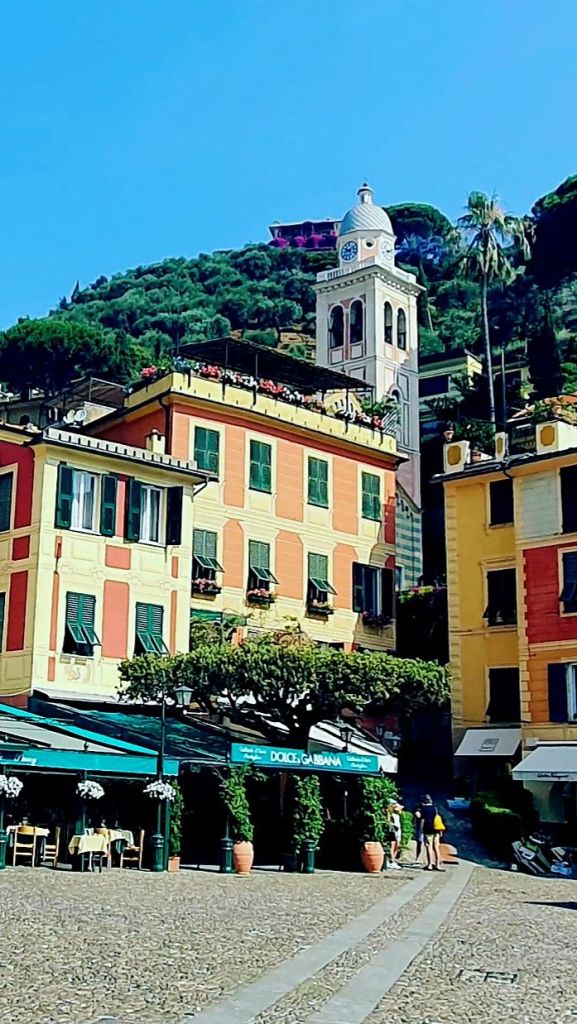
A Brief History TVN style
Portofino’s story begins long before it became shorthand for Riviera glamour. The Romans called it Portus Delphini the Port of the Dolphin, likely due to the marine life in the surrounding waters.
By the medieval period, it had become tied to the nearby Abbey of San Fruttuoso and later fell under the influence of the Republic of Genoa, which dominated much of Liguria.
For centuries, this was a working fishing harbour. Tourism only began to reshape the village in the late 19th century when British aristocrats and Northern European travellers “discovered” it, at which point Portofino began its slow transition from practical to picturesque. Today, it is both: a preserved fishing village and one of Europe’s most recognisable luxury destinations.
Why Portofino Is Different (and worth doing properly)
Portofino is not large. This is important to understand early. It is not a place for rushing. It is a place for positioning yourself correctly, for light, for views, for lunch, for that one perfect moment where everything aligns and you briefly understand why people have been coming here for over a century. What makes it exceptional is contrast, a tiny harbour with global reputation, wild coastal parkland behind polished façades, quiet monastery coves minutes from champagne terraces. It is, essentially, a very small place with an unusually large personality.
Little-Known Details (the things that elevate your experience)
The waters around Portofino are protected as part of a marine conservation area, which is why the sea retains that luminous clarity.
The village sits within a regional park with over 80km of walking trails, many of which tourists never see.
The Church of San Giorgio, overlooking the harbour, has medieval origins and remains tied to local traditions.
Despite its polished appearance, Portofino only transitioned from fishing economy to tourism relatively recently in historical terms.
The Essential Sights
The Piazzetta (Harbour)
Address: Piazza Martiri dell’Olivetta, 16034 Portofino
This is Portofino’s stage. Everything happens here, arrivals, aperitivo, quiet observation, and a level of people-watching that deserves its own discipline.
What to do here:
– Sit facing the water (not inland – this matters)
– Order something simple (spritz, espresso, or champagne depending on mood and budget)
– Stay longer than feels efficient
Best time: before 10am or after 6pm
Reality check: yes, it is expensive. That is part of the admission.
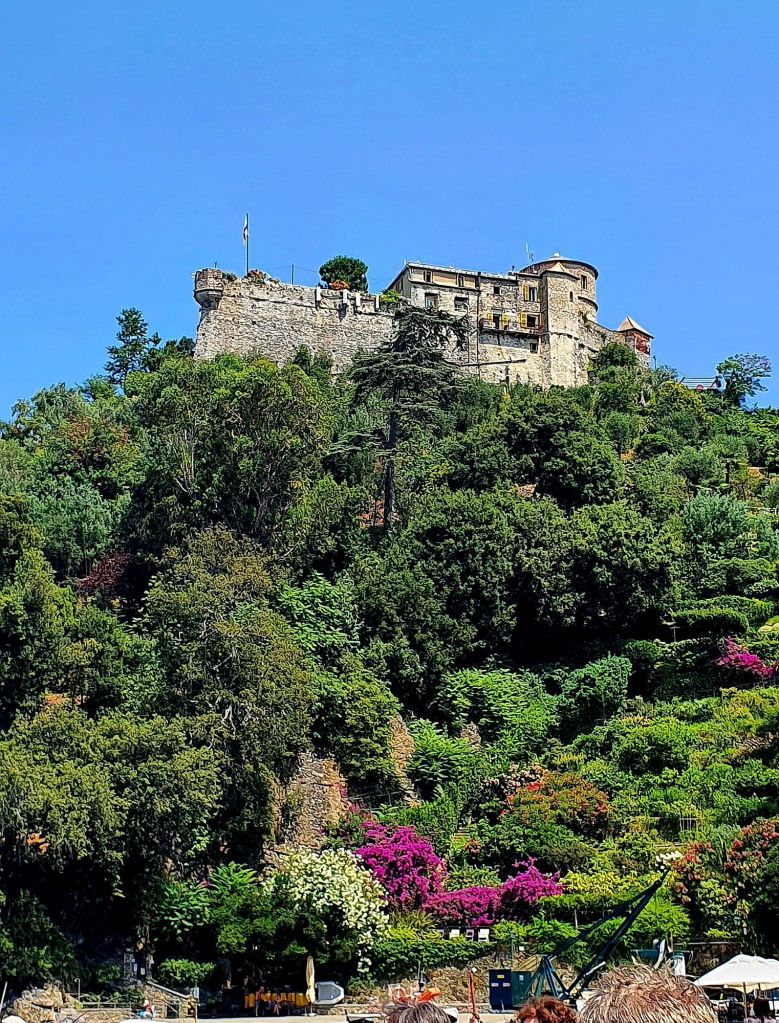
Castello Brown
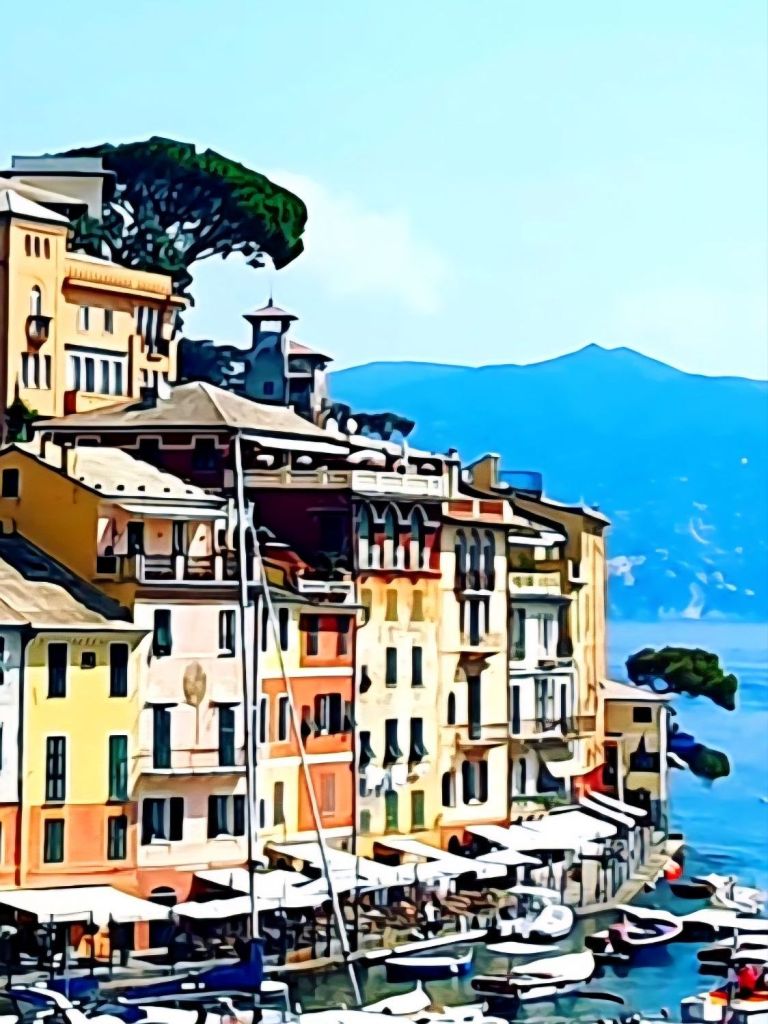
A historic fortress turned villa perched above the harbour. The view from here is the defining Portofino image, one you will recognise instantly once seen. The gardens are structured for viewing angles (not accidental).
Approx. 15-20 minute walk uphill from the Piazzeta. It can be challenging in the hot summer sun so stay well hydrated. luckily there is plenty to stop and admire on the ascent – terraces, shaded pathways, historical exterior and lots of breathtaking views of the harbour.
Best tip: go early morning or late afternoon for softer light
Church of San Giorgio
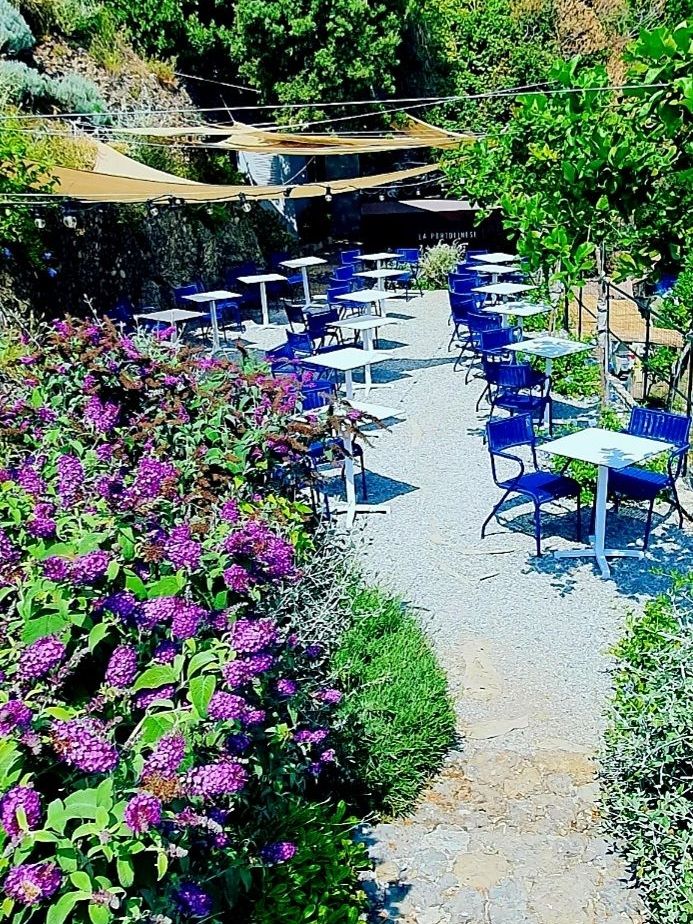
Small, elevated, and perfectly positioned. The walk up is short and worth it for both atmosphere and views.
Address: Salita S. Giorgio, 16034 Portofino
A small but historically significant church overlooking the harbour.
Why visit:
– Houses relics of St. George
– One of the most photogenic elevated points
Pair with: walk to Castello Brown (same route).
San Fruttuoso Abbey
Address: San Fruttuoso, 16032 Camogli (accessible by boat or hiking).
A Benedictine abbey set in a secluded cove between Portofino and Camogli. Reached by boat or on foot, this abbey sits in a secluded cove and feels worlds away from the harbour. It is one of the most quietly impressive places on the Ligurian coast.
Access:
Ferry (recommended)
Hiking trail (approx. 2–3 hours)
Why it’s exceptional:
One of the most unique coastal religious sites in Italy. Also home to the submerged Christ of the Abyss statue offshore.
TVN note: this is the moment Portofino stops being “pretty” and becomes memorable.
Paraggi Bay
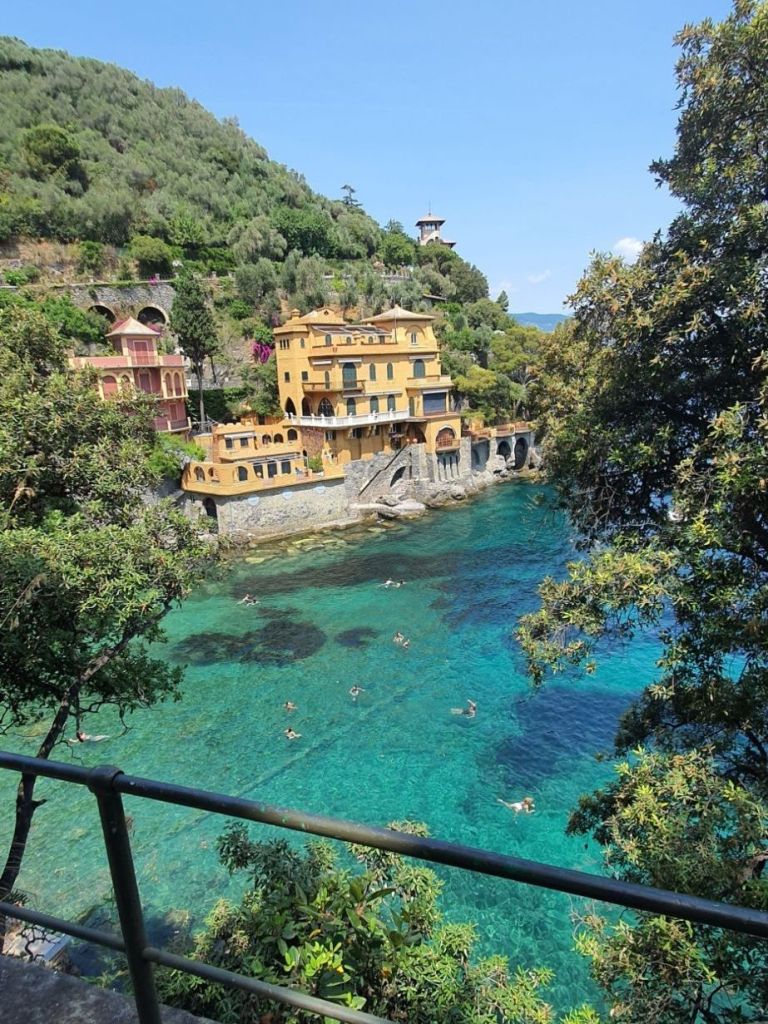
A small, glamorous beach just outside the village with clear, emerald water and a more relaxed pace.
Address: Via Paraggi a Monte, 16038 Santa Margherita Ligure.
Portofino Park Trails
If you do one thing beyond the harbour, make it this. The trails reveal the real Portofino, pine forests, cliff paths, and sweeping coastal views.
Access points around Portofino & Santa Margherita.
Key routes:
Portofino – San Fruttuoso
Portofino – Camogli
Portofino – Santa Margherita coastal path
What to expect:
Forested paths
Cliff views
Proper walking shoes required (this is not decorative strolling).
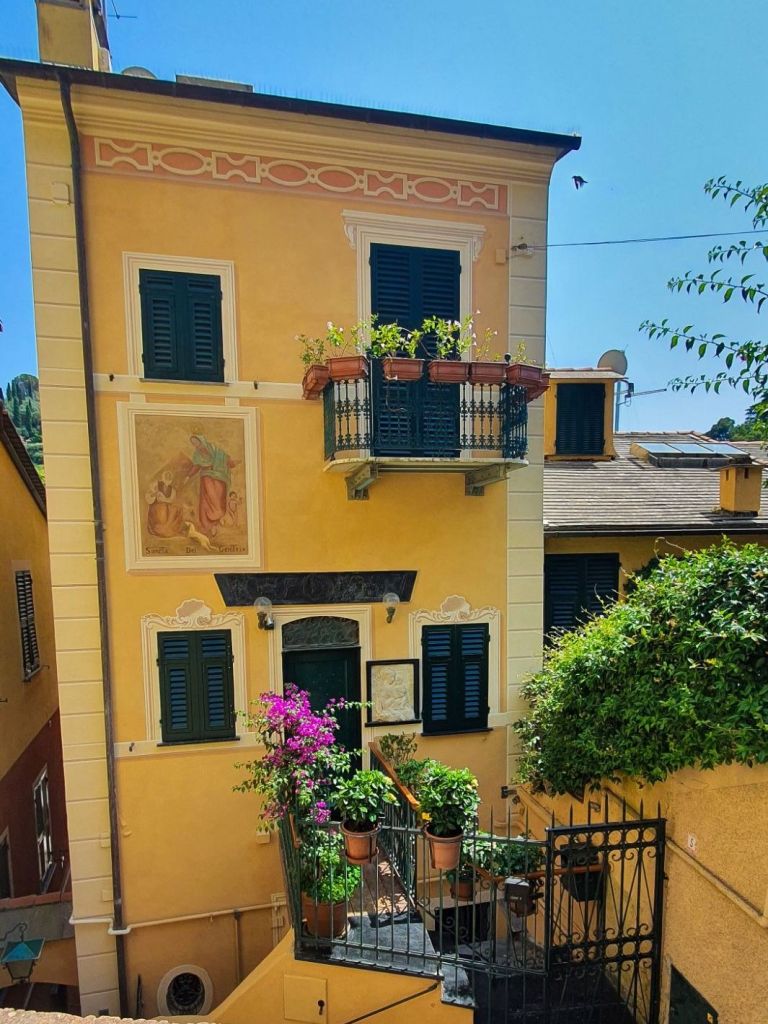
Where to Stay
Splendido, A Belmond Hotel
Address: Salita Baratta, 16, 16034 Portofino
The definitive Portofino hotel. Set high above the harbour, it delivers classic Riviera glamour with sweeping views and that rare sense of occasion.
Aesthetic: classic Riviera glamour, pastel tones, terraced gardens
Best rooms:
Sea View Rooms (essential)
Suites with terrace for full harbour panorama
Signature experiences:
Breakfast overlooking the bay
Pool terrace with uninterrupted views
Dining highlight:
La Terrazza Restaurant – refined Ligurian cuisine
Who it suits:
Those who want Portofino at its most cinematic
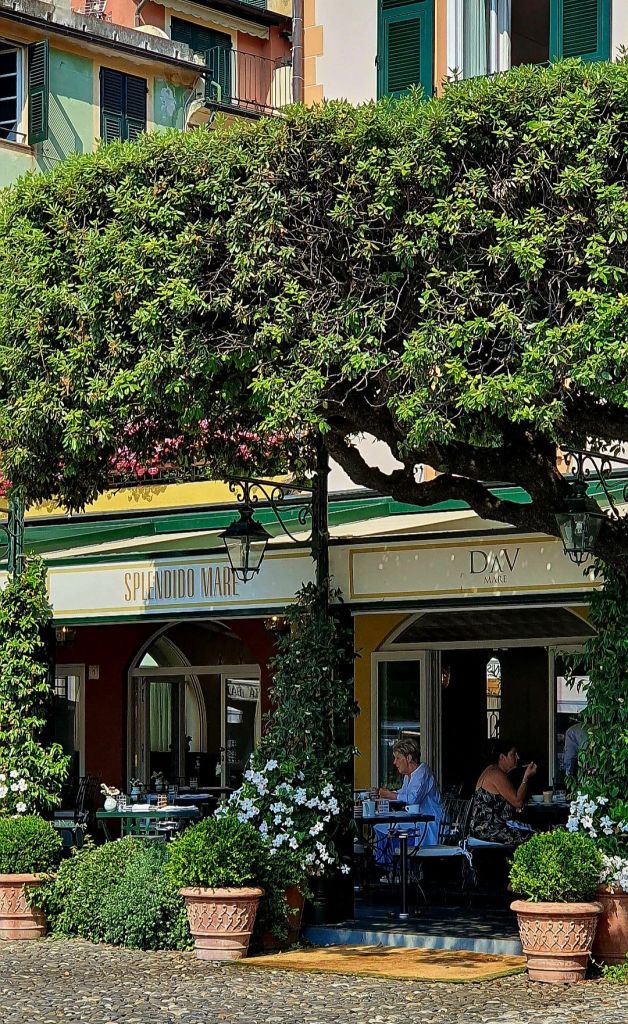
Splendido Mare
Address: Via Roma, 2, 16034 Portofino
Right on the piazzetta. Smaller, more social, and perfect if you want to live inside the harbour atmosphere rather than observe it from above.
Aesthetic: nautical, polished, lighter and more social
Best rooms:
Harbour-facing rooms (non-negotiable if budget allows)
Dining:
DaV Mare – seafood-led, modern Italian
Signature dish style: Fresh seafood, Ligurian classics with refinement
Typical dishes:
Pasta with seafood (e.g. prawns, clams)
Ligurian pesto dishes such as trofie al pesto
Grilled or baked fish
Note: menus change seasonally; dishes vary accordingly
Who it suits:
Those who want to be in the piazzetta atmosphere.
Eight Hotel Paraggi
Address: Via Paraggi a Monte, 56, 16038
A boutique retreat near the beach. Elegant, discreet, and ideal if you prefer a quieter, more private stay.
Aesthetic: boutique, coastal villa, understated luxury
Best rooms: Sea-facing rooms with direct beach proximity
Highlight:
Private beach access
Who it suits:
Quieter luxury, beach-focused stays
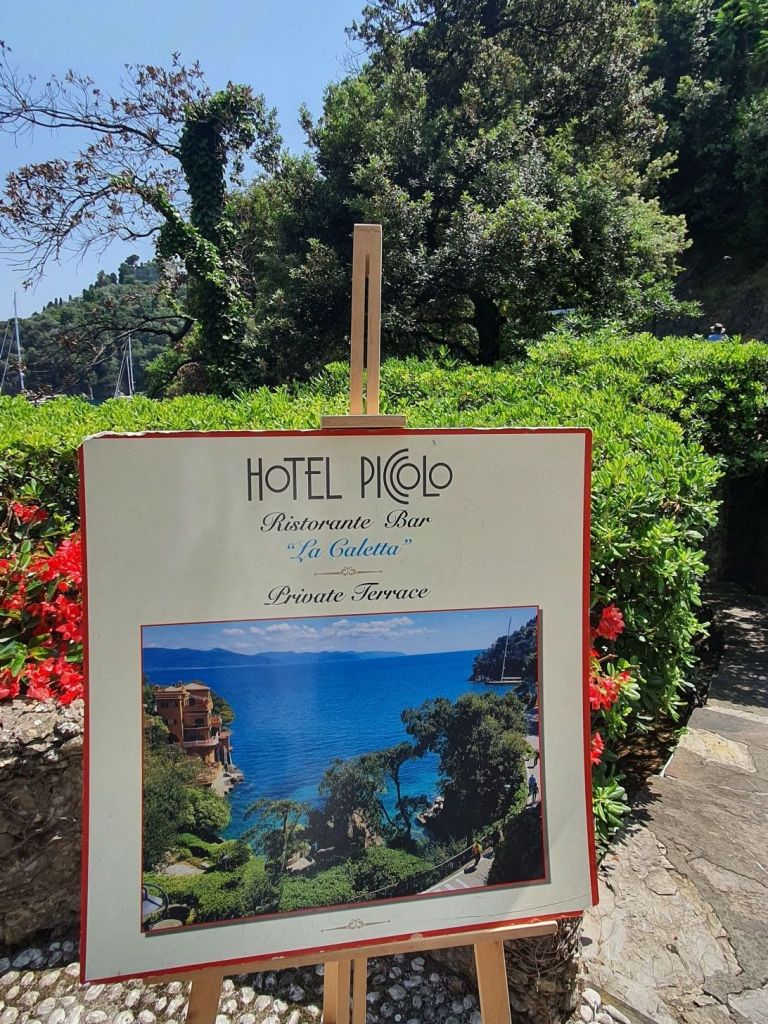
Hotel Piccolo Portofino
Address: Via Duca degli Abruzzi, 31, 16034
A refined 4-star option with sea views and a more accessible price point without losing the aesthetic.
Aesthetic: clean, modern Ligurian
Best rooms:
Sea view terrace rooms
Restaurants, Bars & Aperitivo
Portofino dining is as much about setting as cuisine. Accept this early and you will enjoy it properly.
– Ü Caban: small, atmospheric wine bar with local character
Address: Salita San Giorgio, 2
Small wine bar (approx. 15 seats)
Local wines and Ligurian products
Intimate, less performative than piazzetta
Typical offerings: Focaccia, Anchovies, Cheese and cured meats, Regional wines.
– Bar Mariuccia: classic piazzetta stop for aperitivo
Address: Piazza Martiri dell’Olivetta
Historic bar (since 1950s), classic aperitivo stop
Typical offerings: Aperol Spritz, Negroni,
Light snacks
– Langosteria Paraggi: elevated seafood just outside the village.
Address: Via Paraggi a Mare, 17
Seafood-focused. Known for high-quality raw and cooked seafood.
TVN note: Order one excellent meal. Sit properly. Stay longer than intended. This is not a place for efficient dining.
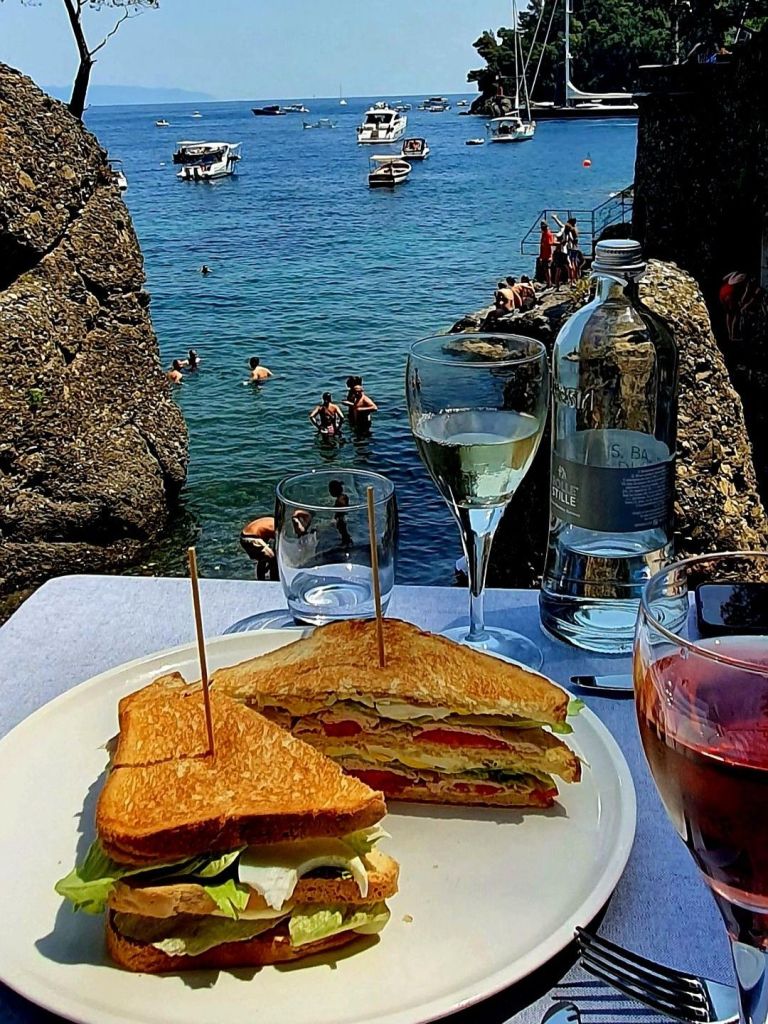
Local Speciality to Try:
Paciugo: The famous paciugo dessert, an extravagant layered gelato sundae originated here in the 1940s. It is delightfully excessive and entirely appropriate for the setting. Traditionally associated with Portofino, typically including ice cream, fruit, cream, and syrup. Best enjoyed slowly and without restraint.
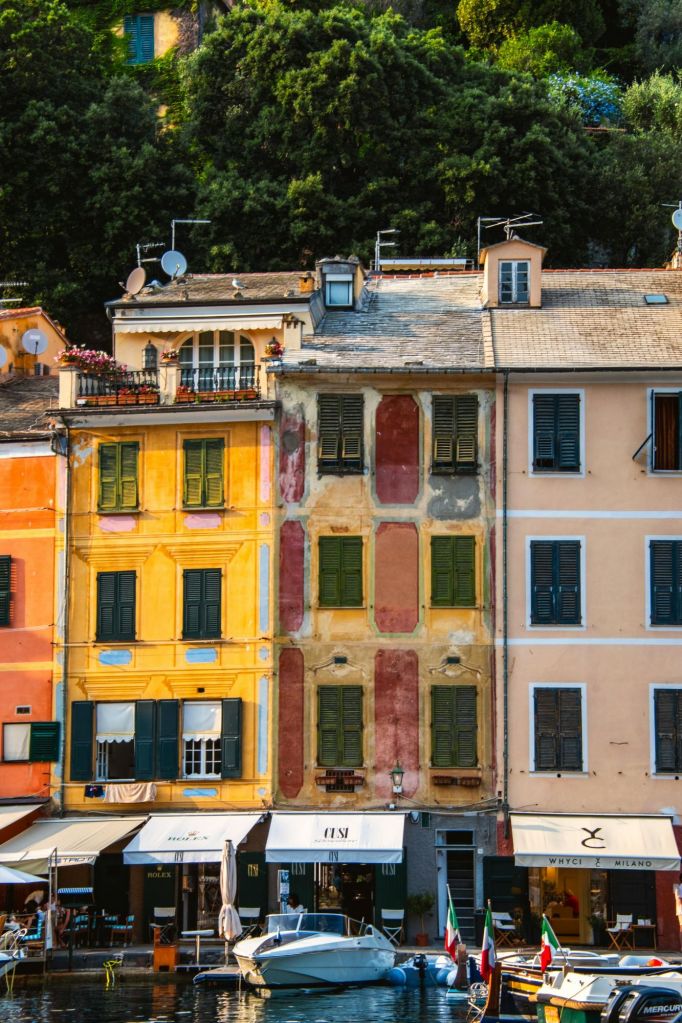
Shopping (curated, not excessive)
Portofino is about selective indulgence rather than volume. You are not here to browse endlessly. You are here to choose one beautiful thing.
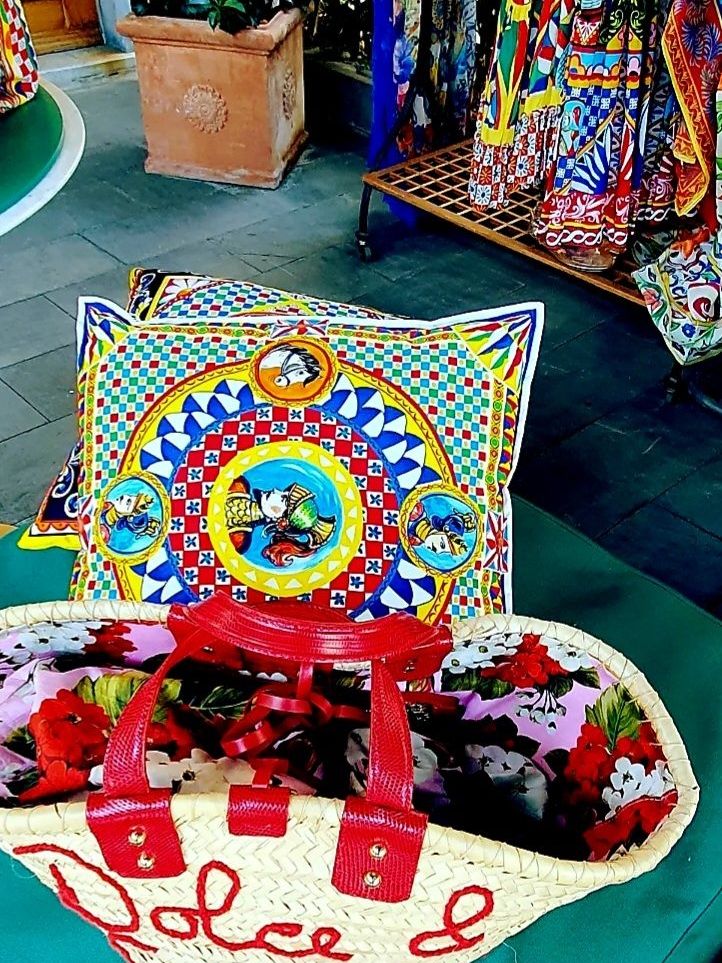
Dolce & Gabbana Boutique
Address: Via Roma, Portofino
Designer mediterranean-inspired collections
Seasonal resort wear
Louis Vuitton
Address: Via Roma, Portofino
Leather goods, accessories. Small but highly curated store
Local Stores: Gourmet establishments selling Ligurian olive oils, Wine & Artisan goods.
Celebrity & Cultural Notes
Portofino has long attracted aristocrats, artists, and high-profile visitors. Its reputation as a discreet luxury escape dates back to the late 1800s and has only strengthened.
It has appeared in film and television and continues to function as a quiet retreat for those who prefer elegance without spectacle, at least publicly.
Instagram-Worthy Spots
– Harbour curve (early morning for best light)
– Castello Brown terrace (the signature view)
Path to San Giorgio (soft, cinematic angles)
– Ferry arrival (the classic reveal)
– Paraggi Bay (for luminous water shots)
– San Fruttuoso (for something more atmospheric).
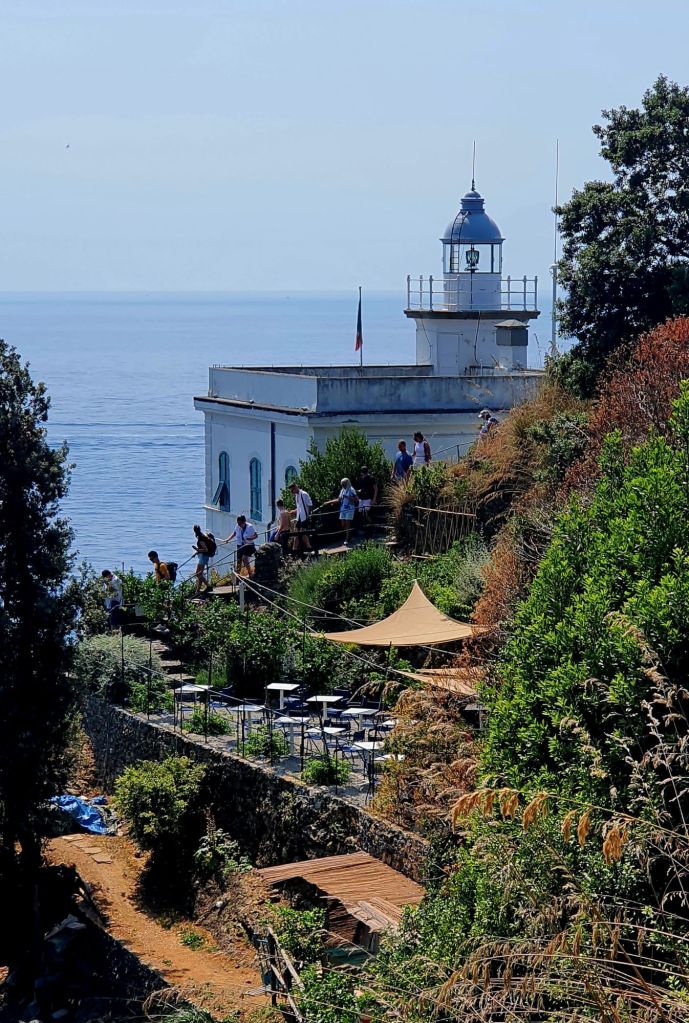
Swimming
Paraggi Beach: Sandy/semi-sandy seabed, Calm water, Public and private sections.
San Fruttuoso Beach: Pebble beach, clear deep water. Suitable for swimming and snorkelling.
Best Time to Visit
April – June: Ideal balance of weather, light, and manageable crowds.
July – August: Peak season—beautiful but busy and expensive
September: Possibly the best month—warm sea, softer pace
October: Quiet, elegant, slightly unpredictable weather
Winter: Peaceful, reduced activity, but still atmospheric
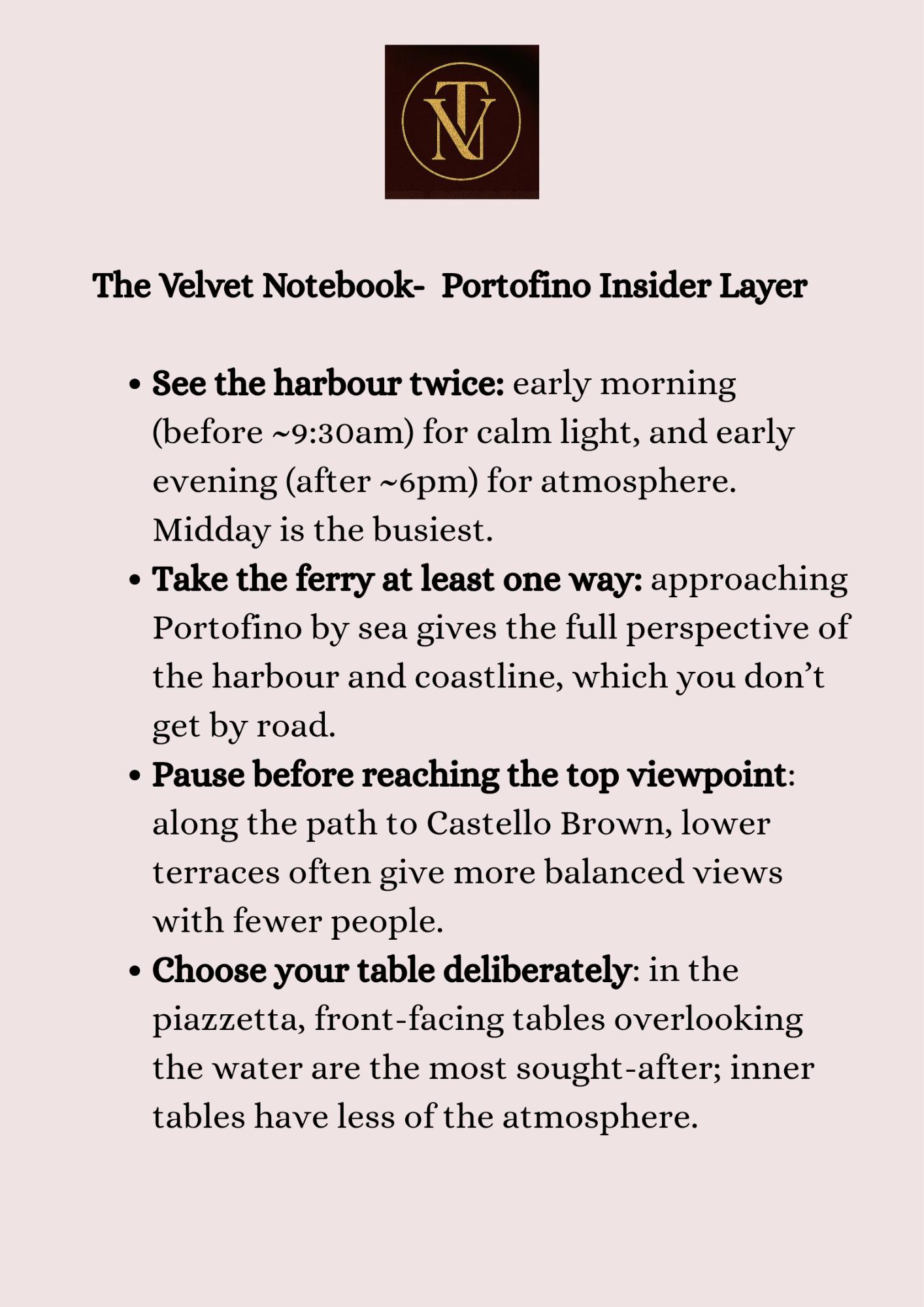
Most visitors see Portofino once—midday, when it is busiest. Locals and repeat visitors know to return twice:
Early morning (before ~9:30am): quiet, balanced light, minimal crowds
Early evening (after ~6pm): softer atmosphere, better light, more relaxed pace
TVN Note: Portofino is consistently expensive. What locals (and regulars) do instead:
Choose one proper meal. Keep the rest simple (coffee, light lunch, aperitivo).
This keeps the experience high-quality without turning the day into a running total.
How Long to Stay:
Day trip: sufficient for main sights
1–2 nights: allows fuller experience including surrounding areas
Portofino is commonly reached via:
– Ferry from Santa Margherita Ligure
– Bus or taxi
– Parking is limited
– Walking is the primary way to move within the village
Portofino does not reward urgency. It is not a place to be completed, but one to be observed—slowly, and with intention. The harbour, the hills, the water, the light—they reveal themselves best when nothing is rushed. Stay a little longer than planned, choose carefully where you sit, and allow the day to unfold without structure. That is where Portofino shifts from something simply beautiful to something quietly unforgettable.
The difference in Portofino is rarely what you see, but how you experience it.
The Velvet Notebook Insider Notes have been designed to guide that—available to download below.
 thevelvetnotebook.com
Leave a comment