A definitive slow-travel journey (3–1–3–2)
Paris sets the tone, Milan sharpens the pace, Florence slows the pulse, and Venice lingers. The trains don’t interrupt the story, they are the story.
Paris to Venice by train is not a compromise on getting there. It is, arguably, the whole point. The journey takes you through some of the most quietly beautiful landscapes in Europe, city by city, each one distinct, each one worth slowing down for. This guide covers the full route, Paris, Milan, Florence, Venice, with the places worth your time, the details worth knowing, and the moments worth planning around. Consider it your edit for doing this particular journey properly. The story starts in Paris. It ends in Venice. Everything in between is the point.


Paris: 3 nights
A TVN Note on Paris
Three nights in Paris is enough to fall in love with it and not nearly enough to do it justice. The listings that follow are not a checklist. No itinerary will fit all of these into 72 hours without turning a trip into a sprint, and that is precisely what The Velvet Notebook is not about.
Think of this as your personal directory of the Paris worth knowing. Pick three or four things that genuinely call to you, do them slowly and well, and leave the rest for next time. Because there will always be a next time with Paris. That is rather the point of it.
The Louvre and Versailles alone are full days each. Montmartre demands an entire morning. The Galerie Dior needs at least two hours or more. Layer these with a long lunch, a good walk and an unplanned hour in a café and you will have spent three days in Paris exactly as three days in Paris should be spent.
Stay: Hôtel Élysées Regencia, Paris
Address: 41 Avenue Marceau, 75016 Paris
A majestic Haussmannian stone building on Avenue Marceau, the Élysées Regencia is one of those quietly impressive Paris addresses that rewards those who seek it out. A four-star boutique just five minutes’ walk from the Champs-Élysées, the Arc de Triomphe, and the Triangle d’Or.
There are 43 rooms, some with city views, decorated with modern interiors and bathrooms of the highest standard. L’Occitane toiletries, a hammam, massage services, and a small gym round out the wellness offering, more than you’d expect at this price point.
The location is the real star. Sitting in Paris’s Golden Triangle, the Eiffel Tower, Arc de Triomphe, and Champs-Élysées are all walkable, with George V and Alma Marceau metro stations both within 500 metres.
La Galerie Dior
Address: 11 Rue François Ier, 75008
Best time: Weekday late morning (arrive for opening window; avoid last-entry rush). Open 11:00–19:00, closed Tuesdays; last entry 17:30. Tickets are timed and sell out so book online in advance. You will need to produce your ticket booking on arrival and on time arrival is very strict.
This is not fashion content. It is Parisian craft culture, and it announces itself the moment you walk through the door.
The first thing you encounter is a soaring vestibule and a spiral staircase that stops you completely. Behind glass, ascending from floor to ceiling, is a cascade of miniature Dior creations – doll-sized ballgowns, handbags, hats and heels arranged in a breathtaking rainbow that shifts from ivory and cream through every shade of pink, coral, red, orange, yellow and eventually deepest black. It is one of the most photographed installations in Paris and entirely deserves to be. What makes it even more clever is that this staircase is the exit, not the entrance. You are taken by lift to the top floor and descend through it at the very end, making the whole thing feel like a curtain call. You can of course walk up the stairs if you prefer and stop and take photos along the way.
The gallery covers 2,000 square metres across three levels and 13 rooms, each visited in sequence. It begins with the man himself – photographs, personal letters and archival objects that trace Christian Dior’s childhood, his rise to global fame, and his sudden death in 1957 at the height of his powers.
One of the most quietly extraordinary rooms is his restored office. Dior called it his office of dreams. It has been returned to its original state, the work table, fabric swatches, original sketches and all and feels less like a museum display and more like he has simply stepped out for a moment. Immediately alongside it, a glass floor reveals a recreation of the original model cabin below, the backstage space where the mannequins would dress and prepare before each show. Looking down through the floor into that world is a detail that stays with you.
There is also a working atelier within the gallery where visitors can watch a live artisan at work, surrounded by the white toile dresses that form the starting point of every haute couture gown before it becomes what it eventually becomes. Watching the hands is enough to understand the scale of what goes into a single garment.
Plan for 90 minutes to two hours. The Café Dior at the end of the visit is open to museum visitors only, a calm and pretty place to sit with a coffee or something sweet before re-entering the city. It earns its place.
TVN Note: Afterwards, pair it with a slow walk through Avenue Montaigne afterwards, not to shop, but to absorb Paris doing Paris.
The Louvre
Address: Rue de Rivoli, 75001. Metro: Palais Royal – Musée du Louvre (lines 1 and 7).
Opening hours: Daily except Tuesdays. 09:00 to 18:00, with extended hours until 21:45 on Wednesdays and Fridays. Tickets from €22 for adults. Book timed entry online in advance, the museum regularly sells out, particularly in peak season.
The Louvre is the largest art museum in the world and one of the most visited buildings on earth, which means the experience of being inside it requires some thought before you arrive. It houses over 35,000 works across three wings – Denon, Sully and Richelieu and attempting to see everything is a mistake. Decide what matters to you and move through the museum with purpose.
The three works every visitor comes for are the Mona Lisa, the Venus de Milo and the Winged Victory of Samothrace. The Mona Lisa is in the Denon Wing on Level 1 and will always be surrounded by people, it is smaller than most people expect and behind glass. Go early or on a Friday evening when the museum is quieter and the experience is more contemplative. The Venus de Milo and Winged Victory are equally extraordinary and considerably less mobbed. The Winged Victory at the top of the Daru staircase is one of the great arrival moments in any museum in the world.
Beyond the headline works, the Napoleon III Apartments in the Richelieu Wing are among the most opulent interiors in Paris and largely overlooked by visitors rushing between the famous rooms. The Egyptian Antiquities collection in the Sully Wing is vast and genuinely absorbing. The French Crown Jewels are also here.

TVN Note: For the best experience, arrive at opening at 9:00am or visit on a Friday evening after 17:00pm when the crowds thin considerably. Wednesday and Thursday mornings are the quietest weekdays. Avoid weekends, public holidays and the first Sunday of the month when admission is free and queues are at their longest.
Skip the main Pyramid entrance if you can. The Carrousel du Louvre entrance, accessed via the underground shopping mall beneath the plaza, typically has shorter queues and protects you from the weather. The museum is closed on Tuesdays. Allow a minimum of three hours for the highlights. A full and unhurried day if you want to go deeper.
TVN Tip: Friday evening in the Louvre, when the crowds have thinned and the light through the Pyramid changes, is one of the more quietly extraordinary ways to spend an evening in Paris.
The Palace of Versailles
Address: Place d’Armes, 78000 Versailles.
Getting there: Take the RER C train from central Paris toward Versailles Château Rive Gauche. The journey takes approximately 35 to 45 minutes. The palace is a ten-minute walk from the station.
Opening hours: daily except Mondays. Palace opens at 9:00am. The Trianon Estate opens at noon. The gardens are open every day and free from November to March. From April to October, garden access is ticketed on days featuring the Musical Fountains Show. Book timed entry tickets in advance via the official website.
Versailles began as a hunting lodge and was transformed by Louis XIV into the most extravagant statement of royal power in Europe, a palace so enormous, so gilded and so deliberately overwhelming that it was designed to make every visitor feel small. It worked then. It still works now.
The must sees are numerous but a handful stand apart. The Hall of Mirrors is the centrepiece, 357 mirrors reflecting the gardens, 357 windows flooding the room with light, and the site of the signing of the Treaty of Versailles in 1919. It is always busy but always worth it, and extraordinary at opening before the tour groups arrive. The King’s Grand Apartments are a procession of opulent salons decorated by the painter Le Brun, each named after a planet. The Queen’s Grand Apartments have been restored to Marie Antoinette’s era. The Royal Chapel is a masterpiece of baroque proportion best seen from the upper gallery. The Gallery of Battles contains vast canvases of French military history and is largely empty of crowds.
Beyond the palace itself, the gardens designed by André Le Nôtre are on a scale that is difficult to comprehend until you are standing in them. The formal parterres, the ornamental basins, the tree-lined allée, all of it radiates outward from the palace in perfect symmetry. On Musical Fountains Show days, running Saturdays and Sundays from April to late October, the fountains are set in motion to baroque music. It is theatrical and entirely worth planning around.

The Trianon Estate, a 30-minute walk or short train ride from the main palace, is where the visit becomes more intimate. The Grand Trianon is a smaller, quieter palace used by the kings as a private retreat. The Petit Trianon was Marie Antoinette’s personal residence and is on a human scale that the main palace deliberately avoids. The Queen’s Hamlet next door, a romantic rustic village built for the queen to escape the formality of court, is one of the strangest and most beautiful things on the entire estate.
TVN Note: Arrive at opening at 9:00am for the Hall of Mirrors before the crowds build, then move to the gardens and Trianon Estate after lunch when the morning tour groups have gone. Alternatively, spend the morning in the gardens and visit the palace from early afternoon onward. Wednesday and Thursday are the quietest days. Avoid Tuesdays, when many Paris museums close and Versailles absorbs the overflow, and avoid Mondays entirely as the palace is closed.
Plan for a full day. This is not a half-day destination.
TVN Note: Take a picnic and find a spot along the Grand Canal after lunch. The scale of the landscape, the silence, and the view back toward the palace is the version of Versailles that stays with you longest.
Montmartre
Core area: Rue des Abbesses / Rue Lepic / Place du Tertre
Best time: 8:00am to 10:00am for quiet streets and best light. Golden hour for soft stone and long shadows.
Montmartre is the neighbourhood that Paris is most romantic about, and most conflicted by. It sits on a hill in the 18th arrondissement and has been drawing artists since the Belle Époque, when Renoir, Toulouse-Lautrec, Van Gogh, Picasso and Modigliani all lived and worked here. The cobbled streets, working vineyard, remaining windmills and village-within-a-city atmosphere are genuine. The tourist crush around Sacré-Coeur and Place du Tertre is equally genuine. The answer is timing.
Rue Lepic is the spine of the neighbourhood, climbing uphill from the bottom of Montmartre and lined with cafés, boulangeries and independent shops.
Number 54 is where Van Gogh lived with his brother Theo from 1886 to 1888. Café des Deux Moulins on the same street is where Amélie worked in the film, and is still very much worth a coffee. Place du Tertre is the square where portrait artists have gathered for generations, each licensed for one square metre of space. It is touristy and worth seeing early, before the crowds make it impossible to stand still. The Je t’aime Wall, a mosaic of blue tiles reading “I love you” in 312 languages, is a few minutes from Abbesses Metro and is exactly as charming as it sounds.
A food tour works particularly well here because Montmartre shifts character every two streets and rewards being moved through it slowly.

The Montmartre Food Trail
A food tour through Montmartre is not just a treat. It is a revelation. The neighbourhood shifts character every two streets and rewards being moved through it slowly, which is exactly why eating your way through it works so well.
We began at Carette, where time seems to pause beneath gilded ceilings and rows of jewel-toned macarons. Their choux à la crème are unapologetically Parisian – fluffy, light and entirely worth the detour. The Montmartre location feels like the quieter, more intimate version of the famous Place des Vosges outpost, and is all the better for it.
From there, the whimsical Biscuiterie de Montmartre on Rue Norvins, a hidden gem with a charming blue façade that the scent of vanilla and butter finds you before you find it. Their sablés are made using century-old recipes that were once reserved for aristocratic tables. It is a small shop with a serious pedigree.
Down the hill, Les Choupettes on Rue de Steinkerque greets you with warmth and a kind of sugar-dusted whimsy. Part boutique, part confectionery fantasy, it is best known for its mendiants chocolate discs scattered with dried fruit and nuts and its impossibly pretty packaging. The name, for those who don’t know, is a nod to Karl Lagerfeld’s famously pampered cat. An homage to elegance, with a wink.
Before you even reach the door of À la Mère de Famille , the exterior stops you. That deep green and gold façade, the coat of arms above the entrance, the warm glow of the displays inside, it announces itself with the quiet confidence of somewhere that has absolutely nothing to prove. It has been here since 1761, making it the oldest chocolate shop in Paris, and it looks exactly as it should.

Founded by a young grocer from the provinces, the shop passed through several families across the centuries before the Dolfi family took over in 2000 and expanded it across the city. There are now multiple Paris locations, but the original boutique on Rue du Faubourg Montmartre is the one that matters. Its façade was listed as a historical monument in 1984 and the interior has barely changed since the late 19th century, mosaic tiled floors, patinated woodwork, metal chandeliers, glass jars of sweets lined up exactly as they always have been. The products are made from the house’s own recipes, many of them unchanged for generations. The Palets Montmartre are the signature biscuit, made exclusively here. The praline rochers, the Folies de l’Écureuil, almonds and hazelnuts roasted, caramelised and coated in dark chocolate, the soft caramels, the orangettes and the house’s own marzipan are all worth taking home. The seasonal chocolate sculptures at Easter alone are worth a detour.
This is not a concept store or a luxury rebranding of something old. It is simply the real thing, still doing exactly what it has always done, in the same walls, on the same street. In Montmartre, where so much trades on atmosphere, À la Mère de Famille earns every bit of its reputation quietly and completely.
The crown jewel is Aux Merveilleux de Fred. Stepping inside is like entering a chandelier-lit dream, crystal chandeliers above rows of delicate merveilleux, airy meringues coated in whipped cream and chocolate shavings. The confections take their name from the post-revolutionary fashionistas known as Les Merveilleux, who dressed extravagantly and lived entirely for beauty and indulgence. The cakes are a very fitting tribute. There are several Paris locations but finding one in Montmartre feels exactly right.
Montmartre once housed over 30 windmills. A few still stand. Today the neighbourhood is equally known for the windmills of cream, butter and sugar turning quietly in its pâtisseries. In Montmartre, indulgence is a virtue.
Sacré-Cœur
Address: 35 Rue du Chevalier de la Barre, 75018
Opening Hours: 6:30am to 22:30pm. Free entry.
There is something quietly powerful about arriving at Sacré-Coeur before the city fully wakes up. The steps are almost empty, the light is soft, and the white domes glow against the early sky in a way that no photograph quite captures. Come back at golden hour and the stone turns warm and the view across Paris becomes one of the most iconic skyline moments the city offers. Both versions are worth experiencing if you have the time.
The basilica was built as an act of national penance following France’s defeat in the Franco-Prussian War of 1870 and the turbulent, bloody events of the Paris Commune that followed. Construction began in 1875 and took forty years, with seven architects involved across the build. It was finally consecrated in 1919, after World War I had also come and gone. The architect Paul Abadie designed it in a Romano-Byzantine style, a deliberate departure from the Gothic tradition of Notre-Dame. The stone it is built from has a remarkable quality when exposed to rainwater it releases a white substance that hardens in the sun, which is why the basilica stays so strikingly bright while the rest of the city ages around it.
Inside, the muted grey interior is a deliberate contrast to the dazzling exterior. The apse is dominated by one of the largest mosaics in France, 475 square metres of gold and blue. The basilica has maintained perpetual adoration of the Holy Eucharist without interruption since 1885, meaning prayer continues here every hour of every day of the year. That continuity, in a city that has seen so much, gives the place a particular stillness. Photography is not permitted inside.
The funicular from the bottom of the hill is a useful alternative to the 222-step climb if needed, and runs on a standard Paris metro ticket.
Best time: Right at opening (quiet and devotional glow) or late afternoon for warm light for the city’s most iconic skyline moment.

Moulin Rouge
Address: 82 Boulevard de Clichy, 75018
Even if you never go inside, the Moulin Rouge demands a moment of your attention. Early evening, when the red neon begins to glow against the darkening sky and the famous windmill turns above the rooftop, is when it earns its reputation most completely. It is one of those Paris sights that is exactly as cinematic in person as you imagined it would be.
The Moulin Rouge opened on 6th October 1889, the same year as the Eiffel Tower, at the foot of the Montmartre hill. It was founded by Joseph Oller and Charles Zidler with a singular ambition to create a place where every social class dissolved into the same room. Wealthy Parisians, working people, artists, tourists and the city’s more colourful characters all came together under one roof, drawn by the spectacle of the French Cancan, the high-kicking, skirt-lifting dance that was born here and scandalized and thrilled audiences in equal measure.
The painter Toulouse-Lautrec made the Moulin Rouge internationally famous through his posters, his work becoming inseparable from the image of what the cabaret was and what it represented.
The original building burned down in 1915 and was rebuilt, reopening in 1924 in the form that largely exists today. Over the years the stage has welcomed Edith Piaf, Frank Sinatra, Ella Fitzgerald and Charles Aznavour among many others. The current show, Féérie, features around 100 performers in a parade of 1,000 costumes. By superstition, every Moulin Rouge show since 1963 has begun with the letter F. The cabaret is also, less poetically but impressively, the world’s largest private consumer of champagne, opening 240,000 bottles per year.
If you are going to a show, dress code is smart and elegant. Photography inside is strictly forbidden. Tickets start from around €87 per person for the show only and rise considerably for dinner packages. Book well in advance.
TVN Note: If a show is not on your itinerary, simply stand outside at dusk with something cold in hand. The exterior alone is worth the detour.
The Moulin Rouge Boutique: No visit to Montmartre is complete without at least pausing at the Moulin Rouge store, the boutique attached to it is a destination in its own right. Step inside and the walls are a deep, unapologetic red, the kind of red that means business, with gold lettering and floral arrangements that make it feel more like a set than a shop. The pieces inside are beautifully considered, silk hair brushes, notebooks, elegant little tins of Moulin Rouge biscuits, jewellery, prints and souvenirs that sit well above the usual tourist fare. Everything is branded with that iconic script and everything feels like a piece of the legend rather than a cheap reproduction of it. Whether you are going to the show or simply passing through Montmartre, the boutique alone is worth the detour. Leave the budget for a moment of splurge.

Emily in Paris: Montmartre is one of the show’s visual signatures, and the “fantasy Paris” lens has undeniably shaped travel interest. Netflix’s own guide lists Montmartre cafés and brasseries used on-screen. La Maison Rose (the pastel façade moment that always photographs) is widely cited as a show-linked Montmartre stop. Belle Époque glamour made real.

TVN Hidden-secrets Montmartre:
Montmartre is best treated like a gradient: start at Abbesses, climb slowly, then drift away from the densest basilica routes for quie that still hold the romance.
Carette
Address: Place du Tertre / Rue Norvins area, 75018 Paris
Where Trocadéro is grand and Place des Vosges is literary, Carette Montmartre is romantic and theatrical, perched high on the hill among artists’ squares, cobbled streets, and the quiet gravity of history. This is not a sprawling salon. It’s a refined refuge tucked into one of Paris’s most storied neighbourhoods.
The Experience:
Entering Carette in Montmartre feels like stepping into a pause between eras.
Outside, Place du Tertre hums with portrait artists, footsteps on stone, and the low murmur of multiple languages. Inside, everything softens. The palette becomes calmer. The noise recedes. The pastry counter is immaculate, restrained rather than abundant, a curated edit rather than a spectacle. Tarts gleam under glass. Mille-feuille layers are precise, architectural. Macarons appear jewel-toned but muted, never garish.
The hot chocolate is thick, glossy & deeply comforting and feels particularly right here, high above the city, where Montmartre’s village past still lingers.
Best time: Late morning (before the heaviest queues) or mid-afternoon pause.
Carette’s Montmartre address feels intentionally different from its sister locations and that’s precisely what makes it special.
TVN moment: hot chocolate, delicate pâtisserie, and the feeling of Paris being calm rather than performative.
Père Lachaise Cemetery
Address: 16 Rue du Repos, 75020
Best time: Late morning on a weekday (quiet paths, soft light).
It’s not only Jim Morrison, this is a cultural map of memory. Notable graves frequently sought include Oscar Wilde, Edith Piaf, and Chopin.
TVN tip: Don’t treat it as a checklist. Pick a small route, then wander around, Paris becomes almost rural.
Seine Dinner Cruise
A dinner cruise on the Seine is one of the rare Paris experiences that feels quietly magical rather than performative, provided it’s done at the right time, and with the right operator.

Two of the most refined operators are Bateaux Parisiens and Bateaux Mouches both long-established, with glass-roofed boats designed to maximise views rather than spectacle.
As the boat pulls away from the quay near the Eiffel Tower, the city begins to unfold slowly, almost ceremonially. The Eiffel Tower sparkles intermittently, reflected in the dark water, before receding into the background like a stage set.
You drift beneath Paris’s historic bridges, each one distinct, before gliding past the Musée d’Orsay, its clock face illuminated and monumental from the river. The boat curves gently toward Notre-Dame Cathedral, where the Gothic façade appears almost weightless when viewed from the water, stripped of crowds and noise.
Further along, the Louvre reveals itself not as a museum, but as an endless palace lit in warm stone tones, stretching quietly along the riverbank.
Dinner unfolds without urgency. Crystal glasses catch the light. Between courses, Paris simply passes by – bridges, façades, reflections in a city designed to be admired in motion.
Best time: After sunset, ideally on a later sailing (around 8:30–9:00pm in summer), when the city has fully shifted into evening mode and the façades begin to glow.
TVN Note: Book later in the day rather than earlier. Paris needs darkness to shimmer. Book early to reserve window side seats for that obstruction free view of Paris.
TVN Little-known detail:
The Seine was historically Paris’s main transport artery, and many of the city’s most important buildings were intentionally designed to present their most beautiful façades to the river. Seeing Paris this way is not a novelty, it’s how the city was meant to be viewed.
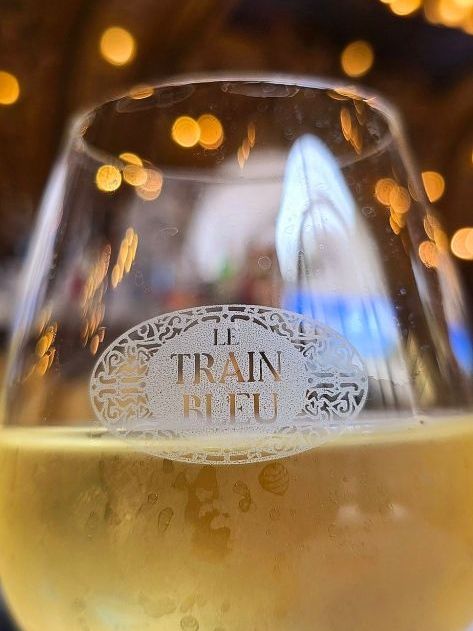
Le Train Bleu Restaurant
Address: Gare de Lyon, Place Louis-Armand, 75012
Best time: Lunch before departure or early dinner. Reservation strongly recommended
Le Train Bleu is not simply a restaurant inside a station, it is one of Paris’s great theatrical dining rooms, designed to make travel feel momentous. Stepping inside Le Train Bleu feels like entering a preserved moment in time. Opened in 1901 for the Exposition Universelle, the restaurant was created to impress international travellers arriving in Paris by rail. Its purpose was clear: before guests even set foot in the city, Paris would announce itself through beauty, grandeur, and hospitality.
The dining room unfolds in lavish Belle Époque style – soaring ceilings richly painted with murals depicting landscapes and cities across France, gilded mouldings and cornices catching the light, enormous mirrors amplifying space and drama, chandeliers casting a warm, golden glow over crisp white tablecloths. Every surface is intentional. Nothing is minimal. This is Paris at its most unapologetically ornate, a reminder that travel was once an event to dress for, linger over, and remember.
TVN Note:
Le Train Bleu is officially listed as a Monument Historique. The décor is protected, which is why it feels so intact, so immersive, so untouched by trend.
Famous Diners: Over the decades, Le Train Bleu has hosted an extraordinary roster of diners, not because it chased celebrity, but because it sat at the crossroads of European travel. Notable guests have included: Coco Chanel, Salvador Dalí, Jean Cocteau, Brigitte Bardot & Marcel Proust. Writers, artists, performers, and politicians passed through this room en route to the Riviera, the Alps, Italy, or beyond. Many were leaving Paris; many were arriving. The room has absorbed centuries of anticipation. You don’t dine at Le Train Bleu, you dine within its history.

The Menu: The menu is unapologetically traditional, and that is its strength. Classic French starters (terrines, soups, seafood preparations). Well-executed mains rooted in French culinary tradition. Seasonal desserts that favour elegance over reinvention. A serious wine list, with strong French representation. This is not experimental dining. It is heritage dining, comforting, polished, and reliable.
TVN Note: Lunch is ideal. The natural daylight enhances the room’s colours, and the pace suits a pre-travel pause rather than a late-night indulgence.
A Little-Known Practical Detail from TVN: If you are travelling with suitcases, especially on a long-haul rail journey, there is a discreet lift access that makes Le Train Bleu remarkably civilised. Look for the lift on the front-right side of Gare de Lyon, near the station’s exterior and side entrance. This lift allows you to: avoid hauling luggage up stairs, arrive composed rather than flustered, treat lunch as part of the journey, not an obstacle to it.
What makes Le Train Bleu truly special is its relationship with time. You are not here to rush. You are here because you are between places. As you dine, trains quietly arrive and depart below. There is a low hum of movement, but no urgency. Staff are formal but warm, practiced in the art of unhurried service even when the station outside is in constant motion. It is one of the few places where waiting feels luxurious.
Train: Paris → Milan
MILAN: 1 night
Route: Paris Gare de Lyon → Milano Centrale
Operators: High-speed services such as Frecciarossa/TGV (varies by date).
Typical travel time: around 6h 40m–7h (direct services).
TVN tips for this leg:
Choose a seat at the window for the Alpine transition (even when subtle, it changes the mood).
Pack a light “train lunch kit” even if you’ve done Le Train Bleu – bring water, fruit, a small pastry & if you wish a nice bottle of wine. If you’re feeling rich you can purchase a specially made Train snack box at Le Train Bleu.
A note on Milan
One night is not enough to do Milan justice, but it is enough to understand why it sits apart from every other Italian city. This is not a place of ruins and romance. It is a city of intention, of precision-cut suits, flawless espresso, late-afternoon light through iron and glass, and a population that takes the business of looking good with complete seriousness. Use your time here with purpose.
Stay: NYX Hotel Milan
Why this hotel is a smart choice: steps from Milano Centrale, so the one-night stop becomes frictionless.
The NYX Milan is not a hotel that does anything quietly, it pitches itself firmly at the cool, creative end of the market and commits to the brief entirely. The interiors are bold, irreverent and deliberately conversation-starting, think striking street art murals, quirky sculptures dotted throughout the public spaces, and the kind of design details that make you stop and look twice. Adam and Eve in sunglasses standing in the lobby is not something you see everywhere, and that is rather the point. The rooms carry the same energy – contemporary, confident, black crockery, amber glassware and black and white photography that gives everything a slightly cinematic quality. Milan is a city that takes its style seriously and NYX understands that entirely, just with its tongue firmly in its cheek.
The welcome was genuinely memorable. An unexpected bottle of wine, a beautifully presented pistachio cake topped with crushed nuts and white chocolate, and the kind of arrival that makes you feel like the hotel is genuinely pleased you are there rather than merely processing your booking.
Vibe: Art-led, bold, “lifestyle hotel energy” a playful contrast to the classic Italy that follows. Official descriptions highlight designer rooms, local art, a stylish bar, gym, and terrace spaces.

What to do in Milan
The Duomo di Milano
Address: Piazza del Duomo, Milan. Book tickets online in advance.
You come up from the metro and it stops you. Not because you were not expecting it, but because nothing quite prepares you for the scale of it in person. The Duomo di Milano fills the entire square and then some, a forest of white marble spires so densely carved and so relentlessly detailed that you could stand in front of it for an hour and still be finding new things. Construction started in 1386. It finished, officially, in 1965. 579 years. The Milanese have an expression for anything with no end in sight: “as long as building the Duomo.” Standing in front of it, you understand why.
The marble is worth knowing about before you visit. It comes from the Candoglia quarry, granted exclusively to the cathedral in the 14th century, and it has a quality unique to this stone, rain whitens it rather than darkens it, which is why, centuries on, it still glows. The exterior carries 3,400 statues, 135 spires, 55 stained glass windows and nearly 100 gargoyles. The gilded Madonnina on the highest spire has stood at 108 metres since 1774 and no building in Milan is permitted to be built taller than she is. When the rule was eventually relaxed for modern skyscrapers, a condition was attached, each new building must carry a small replica of the Madonnina on its roof.
Inside is quieter than you expect. 52 columns rise to vaulted ceilings 45 metres above, one for every week of the year. Near the entrance a sundial installed in 1768 still works, precise enough to have been used to regulate clocks across the city. Look up above the altar for the small red light marking where a nail believed to be from the crucifixion is kept in a reliquary. Every September the Archbishop retrieves it using a mechanical lift that Leonardo da Vinci originally designed. These are the details that stay with you.
Do not leave without going up. The rooftop terraces change the experience entirely. You are suddenly walking among the spires at eye level, the city spreading out below, and on a clear day the Alps are visible on the horizon. Take the lift rather than the stairs and save your energy for being up there.
Buy the combined ticket covering the cathedral, the terraces and the Duomo Museum. Shoulders and knees must be covered to enter.
Highline Milano
Entrance: Galleria Vittorio Emanuele II, number 11/12 on the Piazza della Scala side. Tickets from €12.
Most visitors to Milan do not know this exists yet. Highline Milano is a 250 metre walkway suspended 40 metres above the city, running along the rooftops of the Galleria Vittorio Emanuele II from Piazza della Scala all the way to Piazza del Duomo. It follows the original maintenance walkways built when the Galleria was constructed in the 1860s, routes that have been inaccessible to the public for over 150 years.
The project reopened in February 2026 and is still evolving, but what is already open gives you a perspective on Milan that is genuinely new. You look directly across at the Duomo spires from the same level, the city rooftops spread out around you, and on a clear morning the Alps are visible on the horizon. The Sala degli Orologi, a clock room never previously open to the public, is included in the visit alongside an exhibition on the history of the Galleria. A panoramic terrace overlooking Piazza del Duomo completes the experience.
Take the lift from the welcome desk on the ground floor to the sixth floor where the route begins. Go on a clear day and go in the morning before the city haze builds. The view of the Duomo from that height and that proximity is not something you will find anywhere else in the city.
Teatro alla Scala
Address: Via Filodrammatici 2, 20121. Steps from the Duomo and Galleria Vittorio Emanuele II, easy to pair with Brera or an aperitivo.
History: One of the most important opera houses in the world, famed for its demanding audiences and exceptional acoustics. Built on the site of the Church of Santa Maria alla Scala and opened in 1778, it became the global benchmark for opera in the 18th–19th centuries. Bombed in WWII; fully restored and reopened in 1946. Modernised in the early 2000s while preserving historic interiors. The style is Neoclassical (architect: Giuseppe Piermarini). Horseshoe-shaped auditorium, red velvet and gold décor. Seating is 2,000 across six tiers of private boxes.
Famous names, Performers and Conductors: Giuseppe Verdi, Giacomo Puccini, Gioachino Rossini
Museo Teatrale alla Scala Tour: costumes, instruments, portraits, Verdi memorabilia.
Museum visits often include a view into the auditorium (unless rehearsing). Guided tours last 1 hour; self-guided museum visits also available. Weekday mornings (Tue–Thu best).
Performances: December–July opera season. Most prestigious night: 7th December (Saint Ambrose Day). Midweek shows are usually easier to book. Best time to visit – early evening, when the district feels “Milan serious,” not touristy.
Dress and etiquette: elegant, understated formalwear recommended. Smart casual is fine.
Little-known facts:
Audiences were historically so strict that booing was common. Private boxes once functioned as social salons. La Scala has its own orchestra, choir, ballet company and academy.

The Quadrilatero della Moda
The fashion district, bounded by Via Montenapoleone, Via della Spiga, Via Sant’Andrea and Via Manzoni, is the reason Milan’s name carries the weight it does in fashion. In 2024, Via Montenapoleone surpassed New York’s Fifth Avenue to become the most expensive retail street in the world. Every significant fashion house is here. The window installations change with the same deliberation as gallery exhibitions, and the Milanese themselves dress to walk these streets as much as to shop them.
Via della Spiga runs parallel to Montenapoleone and is quieter, more intimate and in many ways more beautiful, lined with independent boutiques and jewellers that do not need to advertise. Walking both streets back to back takes under an hour and costs nothing.
For coffee, Caffè Cova on Via Montenapoleone has been open since 1817. Now owned by LVMH, which tells you something about its standing. Pasticceria Marchesi, owned by Prada, is on the same street and worth a stop for pastry and hot chocolate.
Aperitivo is taken seriously here. Between 18:00pm and 19:30pm the bars of the fashion district fill and the city shifts gear. Il Salumaio di Montenapoleone, tucked into the courtyard of Palazzo Bagatti Valsecchi, is one of the most beautiful spots in the city for a late afternoon drink. The bar at the Bulgari Hotel on Via Privata Fratelli Gabba is calm, beautifully decorated and exactly right for an unhurried Negroni.
For dinner, the Armani Ristorante on the seventh floor of the Armani Hotel on Via Manzoni offers panoramic views over the city alongside Italian cuisine in a setting that is precisely as considered as you would expect. Reservations essential.
Galleria Vittorio Emanuele II
Address: Piazza del Duomo, 20123
There are buildings you visit and buildings you remember. The Galleria Vittorio Emanuele II belongs firmly in the second category. Affectionately known to the Milanese as il salotto di Milano – their drawing room – this is not simply a shopping arcade. It is the beating heart of the city, and has been since 1877.
The History: Designed by architect Giuseppe Mengoni and built between 1865 and 1877, the Galleria was conceived to connect two of Milan’s greatest landmarks: the Duomo and the Teatro alla Scala. Mengoni poured his life into the project, quite literally. He fell to his death from the glass dome just two days before King Vittorio Emanuele II led the inauguration ceremony. His masterpiece outlived him by well over a century, and shows no signs of fading.
The Architecture: The structure is formed in the shape of a Latin cross, with the longer walkway stretching 196 metres and the shorter 105 metres, meeting beneath a central octagonal dome that soars 47 metres overhead. That dome, and the four barrel vaulted glass ceilings that lead to it, flood the entire space with extraordinary light at every hour of the day. The ironwork was crafted by the French Atelier Henry Joret; the glass by Saint-Gobain. The result is one of the finest 19th century interiors anywhere in the world.
The Floor: Look down as much as you look up. The mosaic floors beneath the dome depict the coats of arms of Italy’s great cities: a wolf for Rome, a lily for Florence, a bull for Turin, a red cross for Milan. The bull has become something of a ritual destination in itself. Spin three times on your heel over it and good luck, so they say, will follow. Thousands of visitors do it every single day. TVN cannot confirm or deny the results!
The Shops: Prada has held its original corner here since 1913. Louis Vuitton, Gucci, Versace, Swarovski and Armani complete the luxury offering, alongside fine jewellers and Libreria Bocca, the oldest bookshop in Italy. Every single business inside the Galleria is required by law to display gold lettering on a black background, in keeping with Mengoni’s original vision. The continuity of detail is part of what makes this place feel so removed from ordinary life.

The Cafés and Restaurants: Biffi Caffè has been here since 1867, founded by the pastry chef to the Italian monarch. Savini, the grand white tablecloth restaurant, has fed Milan’s most elegant residents for generations. Camparino in Galleria has been synonymous with the Milanese aperitivo since 1915. The ritual is simple: a Campari Spritz, a table beneath the vaulted glass, and absolutely nowhere else to be.
TVN Note:
The Galleria is free to enter and open around the clock. Late afternoon is when the light through the glass roof reaches something close to perfection like a film set. Go then, order something cold, and let Milan do the rest. The vibe is different from Florence and Venice, more global, glossy, and urban. Pause for aperitivo without chasing the “best” list. Milan’s luxury is the confidence of not trying too hard.

Other things to do in Milan:
Santa Maria presso San Satiro
Address: Via Torino 17, Milan. Free entry.
Just off Via Torino, a short walk from the Duomo, Santa Maria presso San Satiro looks from the outside like any other city church. The interior is something else entirely. Bramante designed a trompe l’oeil apse in the 1480s, a painted illusion of depth on a flat wall so convincing it takes a moment to understand what you are looking at. The church had no space for a real choir, so he painted one. The result is one of the great architectural illusions of the Renaissance, in a building that most visitors to Milan walk straight past. That is exactly the kind of thing TVN is here for, those things worth noticing.
Villa Necchi Campiglio
Address: Via Mozart 14, Milan
A 1930s Rationalist villa in the heart of Milan’s most elegant residential neighbourhood, now managed by the FAI, Italy’s national heritage trust. It was built for a wealthy Milanese industrial family and has barely been touched since. The interiors are extraordinary, original fittings, a heated outdoor swimming pool that was the height of modernity in its day, and a garden that is worth the visit alone. Calm, unhurried and almost entirely unknown to the average visitor. This is Milan’s other luxury, the one that has nothing to do with fashion.
A TVN note on Milan’s free days
If your visit falls on the first Sunday of the month, Leonardo’s Last Supper, the Armani Silos, the Pinacoteca di Brera and the Gallerie d’Italia are all free. On the first and third Tuesday of each month, the Castello Sforzesco, the Museo del Novecento and the Gallery of Modern Art open without charge. Worth knowing before you plan your day.
A TVN tip on Milan:
Milan rewards dressing up. This is not a city where you blend in with trainers and a backpack. One evening here, dressed well, walking slowly through the Galleria at dusk before dinner, that is the version of Milan worth having.

Train: Milan → Florence
FLORENCE – 3 nights
Route: Milano Centrale → Firenze Santa Maria Novella
Operators: Frecciarossa or Italo high-speed. Typical travel time: roughly ~1h 54m–2h 14m depending on service
TVN Note: Arrive in Florence for late afternoon, so your first impression is warm stone and softer pace.
Stay: Hotel Kraft
There are hotels that offer a view. And then there are hotels where the view becomes the memory you carry home. Hotel Kraft is firmly the latter.
The Hotel: Owned by a Swiss family with roots in hospitality stretching back to the 19th century, Hotel Kraft sits on a quiet residential street close to the River Arno, a short walk from Santa Maria Novella station and within easy reach of the Uffizi, Ponte Vecchio, and the Duomo. It is the kind of address that rewards those who prefer calm over chaos, removed from the tourist throngs but perfectly placed for everything Florence has to offer. 75 rooms, all recently renovated, with warm toned walls, parquet floors, and a relaxed elegance that feels authentically Italian rather than assembled for effect.
The Terrazza Rossini
Everything leads to the fifth floor. The Terrazza Rossini is the rooftop restaurant and bar perched at the very top of the hotel, and it is, without question, the heart of the entire stay. The terrace opens out across the full Florence skyline, the Duomo rising ahead of you, Giotto’s Bell Tower to one side, the green hills of Tuscany rolling away in the distance and the Arno glinting below. There is simply nothing else like it in the city.
Breakfast here as the morning light settles over the terracotta rooftops is one of those travel moments that stays with you. Lunch and dinner from an Italian and Mediterranean menu are served through the day, and the bar in the evening is where the terrace truly comes alive. Soft lighting, a Chianti in hand, Florence spread out below, it is almost unreasonably beautiful.

The Storm: Nothing could have prepared for the drama of a Florentine thunderstorm viewed from this terrace. As the sky over the city turned from deep gold to an almost theatrical charcoal, lightning split the clouds directly above the Duomo in great white forks, illuminating Brunelleschi’s dome in flashes against the dark. Thunder rolled across the rooftops in waves. The whole of Florence seemed to hold its breath. It was one of the most extraordinary things witnessed from any hotel terrace anywhere, entirely unplanned, completely unforgettable, and the kind of moment no itinerary could ever account for.
The Pool:
One of the very few hotels in Florence to offer a rooftop pool, and the fact that it sits on the same fifth floor terrace with those same sweeping views makes it something rather special. Heated through autumn and winter and equipped with a hydromassage system, it is not large, but after a long day walking Florence’s streets in the summer heat, it is exactly what is needed. Sun loungers, pool umbrellas, and that view. Enough said.
The Rooms: Rooms range from classic to more contemporary in style, some with private balconies overlooking the city or the Arno. Parquet floors, premium bedding, pillow menus, minibars, and a calm, well-considered finish throughout. The deluxe rooms offer a generous seating area and marble bathrooms with double sinks, worth the upgrade.
TVN Note: Book a room with a balcony if you can. Arrive for aperitivo on the terrace as the sun goes down over the Duomo. And if a storm rolls in, stay exactly where you are.
What to do in Florence:
The Duomo complex
Cathedral of Santa Maria del Fiore
Address: Piazza del Duomo (Via della Canonica 1), 50122
The Florence Duomo is the heart of the city, formally called Cattedrale di Santa Maria del Fiore. With its pink, green and white marble façade and Brunelleschi’s iconic dome, it’s one of the most important architectural achievements of the Renaissance.
What you can visit:
Cathedral Interior – Free entry (timed queues apply). It is a vast, dramatic space, surprisingly austere compared to the exterior. Look up to see Vasari’s fresco of the Last Judgement inside the dome.
Brunelleschi’s Dome (Cupola):
463 steps to the top. Close-up view of the fresco and panoramic views over Florence.
Must be pre-booked with a timed ticket.
Giotto’s Bell Tower (Campanile) 414 steps. Arguably the best external view of the dome. It is a slightly easier climb than the dome.

Baptistery of San Giovanni:
Famous bronze doors (“Gates of Paradise”).
Glittering mosaic ceiling.
Opera del Duomo Museum:
Houses original sculptures and the original Baptistery doors. Often quieter and extremely worthwhile.
Tickets & Booking:
The cathedral itself is free, but all climbs require tickets. Tickets are sold as multi-site passes (valid for several days). Dome tickets sell out, book in advance, especially April–October.
Best Time to Visit:
Early morning (right at opening). Avoid mid-morning to mid-afternoon queues.
Winter months are far calmer than late spring and summer. Dome climbs are best in clear weather for views.
Practical Tips:
Strict dress code: shoulders and knees covered. Arrive 15–20 minutes before timed entries. Wear proper shoes for climbs (stone steps, narrow passages). The dome climb is not suitable for those uncomfortable with tight spaces.
How Long to Allow:
Cathedral interior: 30–45 minutes
Dome climb: 45–60 minutes total
Bell tower: 45 minutes
Full complex (including museum): 2.5–3.5 hours
TVN Note: Do not do Florence “in one day.” Visit the piazza more than once—the light changes the marble completely.
Oltrarno food tours:
Area: Santo Spirito / Oltrarno (across the Arno).
Why it’s essential: This is where Florence feels lived-in – artisan culture, small plates, unshowy excellence.
Oltrarno, meaning “beyond the Arno,” is the district on the opposite side of the river from Florence’s historic centre and is known as the city’s more authentic, artisan and local quarter. It’s famous for traditional craft workshops including leather makers, bookbinders, goldsmiths and marblers, and has a more lived-in, atmospheric feel compared to the polished Duomo area. Key spots include Piazza Santo Spirito with its relaxed café culture, San Frediano’s creative independent boutiques and wine bars, the Renaissance Boboli Gardens with panoramic views, and Palazzo Pitti, the former Medici residence filled with art collections. It’s best explored in the morning for quiet wandering or at golden hour for soft river light, while evenings are lively yet still more local than the main tourist zone, ideal for boutique stays, artisan shopping and wine bars with a true Florentine energy.
The Sunset Food Tour
Oltrarno for a food tour is more urban and intimate, weaving through Florence’s artisan quarter as golden hour settles over Santo Spirito. Over roughly 3–4 hours, you move between curated local spots for multiple tastings, think Tuscan crostini, fresh pasta, cured meats, cheeses, gelato paired with regional wines or a classic Negroni. Many tours include a stop at one of Florence’s historic wine windows (buchette del vino), adding a layer of Renaissance history to the evening. Small groups and local guides keep it personal, and by the end you’ve essentially eaten your way through dinner while discovering one of the city’s most atmospheric neighbourhoods.
The Wine Windows – Buchette del Vino:
Before there were wine bars, before there were aperitivo menus, before any of it there were the wine windows. Florence’s buchette del vino are small stone hatches built directly into the facades of Renaissance palazzos, some dating as far back as the 17th century. Noble families used them to sell wine directly to the public from their private cellars, passing small flasks called fiaschi through the opening in exchange for coins, without the inconvenience of actually admitting the public inside. They fell out of use for centuries. Then came 2020, and in a twist that felt almost too perfectly Florentine, the wine windows came back. During lockdown, bars and restaurants began reopening their buchette to pass out wine, coffee, and gelato to customers on the street – contactless, centuries old, and entirely brilliant.
Today on an Oltrarno food tour (or if you are simply out strolling), you will pass several of these windows still in active use. Stop at one. Order something cold. Stand on a cobblestone street in Florence and receive a glass of wine through a hole in a medieval wall. It is one of those small, perfect travel moments that no five star experience could manufacture.

Tuscan Winery Tour
If you’re looking at Tuscan winery tours from Florence, most experiences take you into the Chianti countryside for half- or full-day visits to family-run estates. Expect guided vineyard walks, cellar tours explaining traditional production methods, and structured tastings of Chianti Classico and Super Tuscans paired with local olive oil, pecorino and cured meats. Many tours include transport from central Florence, small group sizes, and at least two winery stops giving you both the rolling cypress-lined views and a proper understanding of the region’s DOCG wines, terroir and ageing process. It’s the perfect contrast to city sightseeing: slower, scenic and deeply rooted in Tuscan heritage. We visited two Tuscan wineries. First up was the Montecchio Winery where history, land, and flavour meet. Their 300-hectare estate – forty hectares of vineyards heavy with plump Sangiovese grapes, twenty of olive groves, and rolling farmland, is the beating heart of the Chianti Classico region. The welcome began with two joyful labradors.
By our second stop of the day, we were beginning to understand that Tuscan wine touring is a very serious business indeed. Casa Emma in San Donato in Poggio is one of those estates that makes you want to cancel your return flight and simply stay. Founded in 1969 by the magnificently defiant Fiorella Lepri who bought the entire property without telling her husband, the organic Sangiovese-led Chianti Classico here is structured, velvety, and dangerously easy to drink. The Gran Selezione 2020 scored 96 points from Wine Spectator. We scored it considerably higher!
TVN Note: Choose a tour that includes a long lunch, not a “tasting sprint.” Tuscany is not meant to be rushed.
Mercato Centrale on Via dell’Ariento
There are the places you plan, and then there are the places Florence simply delivers to you. The Mercato Centrale on Via dell’Ariento was very much the latter. Stumbling upon it mid-morning with no agenda and no guidebook instruction turned out to be one of the finest accidental decisions of the entire trip.
The ground floor is a working food market of the old school, stalls piled with hanging garlic, cured meats, aged pecorino, wild boar salami, Tuscan wines, fresh pasta, truffle products and more preserved and pickled things than you could name in two languages. It is loud, abundant, completely authentic and deeply, unapologetically Florentine. The vendors know exactly what they have and are not remotely apologetic about it, nor should they be. This is not a tourist market dressed up as a local one. This is simply where Florence eats.
We gathered a few things from the stalls and then did what any sensible person does when they find themselves standing in the middle of one of the great food markets of Europe we pulled up a seat at one of the market stands, ordered a plate of local cheeses and charcuterie, and someone poured the Chianti. Around us the market carried on in full voice. We ate, we drank, we watched Florence go about its day from the best possible vantage point. No reservation required. No dress code. Just good food, a good glass, and the particular satisfaction of a place discovered entirely by accident.

Ponte Vecchio
Location: Ponte Vecchio, over the Arno (central Florence).
Some places arrive fully formed in your imagination long before you get there. Ponte Vecchio is one of them. And then you actually stand on it, with the Arno moving quietly beneath you and the last of the afternoon light catching the gold in every window, and you realise that nothing you imagined came close.
Florence’s oldest bridge has crossed the Arno at its narrowest point since Roman times. What stands today dates to 1345, rebuilt in stone after a flood destroyed its predecessor. It has survived everything the centuries have thrown at it – wars, floods, the particular chaos of Florentine history, and it remains, stubbornly and magnificently, exactly where it has always been. It was the only bridge in Florence the retreating German army did not destroy in 1944. The buildings at either end were demolished to block access, but the bridge itself was left standing. Florence did not forget that.
For most of its early life the bridge was occupied by butchers, fishmongers and tanners. Practical, certainly. Fragrant, decidedly not. When Cosimo de Medici commissioned Giorgio Vasari to build a private elevated corridor above the bridge in 1565, connecting the family’s two palaces without the inconvenience of mingling with the public, the malodorous tradesmen below became something of an embarrassment. By 1593 Grand Duke Ferdinando I had seen enough. A decree went out. Only goldsmiths and jewellers would trade on Ponte Vecchio from that point forward. That decree has never been overturned.
The result, four centuries later, is unlike anything else in the world. Nearly fifty goldsmith workshops line both sides of the bridge, some of them family businesses that have traded here across generations, their techniques and design sensibilities passed down like heirlooms. The pieces in the windows range from delicate contemporary gold work to antique jewels with histories of their own. Some workshops still manufacture on site, in the same way Florentine goldsmiths have worked since the Renaissance. By night the wooden shop shutters fold closed like the lids of jewellery boxes and the bridge becomes something else entirely, quieter, more mysterious, worth every step of the walk back after dinner.
And then there is the leather. Florence’s relationship with fine leather is as old as its relationship with art, and the vendors in the streets surrounding the bridge are where that tradition is alive and entirely unrepentant about what it will do to your budget. One visit. One bag. The kind of bag that has its own presence, that you carry differently, that makes every other bag you own feel slightly apologetic. No deliberation was required. Florence has a way of making the most extravagant decisions feel not only reasonable but frankly inevitable. The bag came home. It was the right call. It will always have been the right call.
Best time: Evening, when shop shutters close and the bridge becomes more atmospheric than commercial aka “evening walk” effect.

Train: Florence → Venice
VENICE: 2 Nights
Route: Firenze SMN → Venezia Santa Lucia
Operator: High-speed services (varies by schedule).
Typical travel time: about 2 hours (common high-speed timing; varies by service).
Stay: Hotel Palazzina Sardi
Address: Fondamenta del Vin, Venice
Named in honour of Giovanni Sardi, the celebrated Venetian architect who designed the original palazzo, Hotel Palazzina Sardi is a property that wears its heritage as elegantly as the city it sits in.
The building itself is a study in Venetian grandeur, Moorish Revival architecture, a Gothic Venetian facade, frescoed ceilings, exposed beams and original artworks that feel entirely at home rather than strategically placed. Ten rooms, each one different, each one combining the kind of historic detail that Venice does better than anywhere on earth with the modern comforts that make a stay genuinely pleasurable rather than merely atmospheric. Venetian and wooden floors, Murano glass chandeliers that are as beautiful in a bedroom as anything you will see in a museum, marble bathrooms and canal views in select rooms. The Junior Suite features an original fresco from the school of Tintoretto and grand arched windows that frame Venice like a painting. Which, in fairness, it essentially is.
The detail throughout the hotel is what sets it apart. Objets d’art are placed with a collector’s eye rather than an interior designer’s checklist, each one considered, each one earning its place. The decor is tasteful and quietly confident, the kind of finish that reveals itself gradually rather than announcing itself immediately. A glass lift connects the floors with a quiet elegance that feels entirely in keeping with the building around it, and which never fails to feel like a small, unexpected pleasure.
Arrival sets the tone immediately. Chilled Prosecco waiting in the room is the kind of gesture that costs very little and means a great deal, alongside a packet of the most beautifully colourful Venetian jellies as pretty as anything in the shop windows of the city, completing a welcome that feels genuinely warm rather than procedural. It is a small thing. It is also exactly the right thing.
The bathrooms deserve a moment of their own. Marble, beautifully appointed, stocked with bathroom amenities that are a pleasure rather than an afterthought, and a rainfall shower that makes leaving feel like a genuine inconvenience. The kind of bathroom that makes you reorganise your morning entirely around it.
The location is exceptional even by Venetian standards. Set right on the Fondamenta del Vin canal, a short walk from Piazza San Marco, the Doge’s Palace, the Bridge of Sighs and the Basilica, the city’s greatest treasures are essentially on the doorstep. Gondolas pass the entrance throughout the day. The vaporetto stop is a minute’s walk. It is as Venetian as it is possible to be without actually living here.
Breakfast is served buffet and à la carte in the elegant indoor hall, the private courtyard, or in room, a genuinely lovely way to begin a Venetian morning. The bar lounge is exactly where you want to be with a Spritz in the early evening. And then there is the altana – the rooftop terrace, over 30 square metres, with an unobstructed view across the rooftops to the Bell Tower of San Marco and the Renaissance church of San Zaccaria. Sunset from up there, with a glass in hand and Venice spread out below, is the kind of thing that makes everything else feel slightly ordinary by comparison.
The staff are singled out again and again by guests because they are warm, attentive and genuinely helpful in a way that goes well beyond obligation. A hotel that knows exactly what it is, delivers on every detail, and understands that in a city this extraordinary, the experience inside matters just as much as everything outside it. We can’t wait to return.
TVN Note: Ask for a canal view room. Get to the altana for sunset. Order the Prosecco.

What to do (and when):
St Mark’s Square – Piazza San Marco
Address: Piazza San Marco, 30100
Napoleon called it the finest drawing room in Europe. He was not wrong, though it feels slightly uncomfortable to credit him with anything given what he subsequently did to the city. St Mark’s Square, Piazza San Marco is the beating heart of Venice, the only space in the entire city given the designation of piazza. Everything else is a campo. This one earned the title.
The History: The square dates to the 9th century, when it began as a modest open space in front of the original St Mark’s Basilica. It was separated from the Doge’s Palace by a small canal, the Rio Batario, which was eventually filled in during the 12th century under Doge Sebastiano Ziani, who enlarged the entire area to reflect Venice’s growing power as a maritime republic. By 1267 it was paved in a herringbone brick pattern. By the 18th century that was replaced with the elegant natural stone design you walk on today, laid in an intricate pattern designed by architect Andrea Tirali. The square you stand in now took the better part of a thousand years to become itself.
For centuries it was not merely decorative. The Doge’s Palace was the seat of government, the supreme courts and the state prison. The Bridge of Sighs connecting it to the cells was not a romantic feature, it was where condemned prisoners took their last view of Venice before disappearing inside. Public executions were carried out between the two great columns at the edge of the piazzetta until the mid-18th century. Laws and decrees were read aloud from the Pietra del Bando and posted for the population to read. The square was where Venice conducted its business, its justice and its ceremonies in full public view. Power, in Venice, was always meant to be seen.
The Basilica
St Mark’s Basilica stands at the eastern end of the square and stops you in your tracks every single time, regardless of how many photographs you have seen. Originally built in 828 AD to house the relics of St Mark the Evangelist, brought to Venice from Alexandria by merchants in circumstances that would politely be described as irregular, it has been rebuilt, expanded and embellished across twelve centuries into something that defies easy description. Byzantine domes, intricate gold mosaics, Romanesque carvings, four bronze horses above the central doorway that Napoleon was so taken with he had them removed and shipped to Paris. They came back. The basilica is nicknamed the Church of Gold for reasons that become immediately obvious the moment you step inside.

The Campanile
The bell tower rising 98.6 metres above the square is one of the most recognisable silhouettes in the world. Originally built in the 9th century as a watchtower and beacon for sailors, the current structure is a reconstruction, the original collapsed without warning on a July morning in 1902, mercifully injuring nobody. It was rebuilt exactly as it was and reopened in 1912. From the top, the views across Venice and the lagoon are extraordinary. It is worth every step of the queue.
The Procuratie and the Caffès
Three sides of the square are lined by the Procuratie, the long arcaded buildings that once housed the offices and residences of the Procurators of St Mark, the highest officers of the Venetian Republic. The Procuratie Vecchie run along the north side, built in the early 16th century. The Procuratie Nuove face them on the south, completed around 1640. Napoleon added the western wing in the early 19th century, demolishing a church to do so, and it now houses the Museo Correr.
At ground level beneath these arcades sit two of the most famous caffès in Italy. Caffè Florian on the south side has been open since 1720, making it one of the oldest continuously operating cafés in the world and was traditionally patronised by Venetians. Caffè Quadri on the north, dating to 1638, was where the Austrians went during their occupation of Venice in the 19th century. The two sides of the square reflected two sides of a city under foreign rule. Today both serve coffee at prices that reflect the postcode rather than the contents of the cup. Order one anyway. It is not about the coffee.
The Acqua Alta
St Mark’s Square sits at the lowest point in Venice, which means that when the tides rise – the acqua alta – it is the first place to flood. Wooden walkways are erected across the square, and Venetians put on their boots and carry on regardless. In November 2019 the water reached 187 centimetres, flooding over 80% of the city in one of the worst tidal events since 1966. The square has survived a thousand years of flooding, two world wars, Napoleon and the pigeons. It will outlast all of us.
TVN Note: Go early morning before the crowds arrive and the square is yours. Go again at dusk when the orchestras play outside the caffès and the light turns the Basilica gold. Both visits are entirely different experiences and both are entirely necessary
Doge’s Palace
The Doge’s Palace has been watching Venice for over a thousand years and it looks every bit as extraordinary as the day it decided to make an impression. Standing on the edge of the lagoon beside St Mark’s Basilica, its Gothic facade of pale pink Veronese marble and white Istrian stone is so extraordinary it barely looks real, more like something imagined than something built.
History: For almost a thousand years, the Doge’s Palace was the centre of one of the most powerful republics the world has ever seen. It was simultaneously a residence, a seat of government, a court of law, a state archive and a prison, all under one extraordinary roof. The Doge himself, the supreme authority of the Venetian Republic, lived and governed here, elected for life by a voting process so deliberately complicated it would take an entire afternoon to explain. He held enormous symbolic power and almost no actual executive authority, bound by strict rules that governed everything from his public duties to his private correspondence. The Republic trusted no one individual entirely. This was by design.
The Architecture:
The building is a masterpiece of Venetian Gothic, combining Byzantine, Renaissance and Mannerist elements across three great wings that have been rebuilt, expanded and restored across centuries. Fires in 1483, 1574 and 1577 caused devastating damage, and after each one Venice rebuilt, choosing each time to preserve the Gothic style rather than replace it with the Renaissance fashions of the day. The decision was deliberate and admirable. When the influential Renaissance architect Andrea Palladio submitted neo-classical alternative designs after the fire of 1577, they were politely declined. Venice knew exactly what it was.
The Interiors: Inside, the scale of the place takes your breath away. The Great Council Chamber alone is 53 metres long and 25 metres wide, large enough to seat 2,000 people and its back wall is dominated by one of the largest oil paintings on canvas in existence. Tintoretto’s Glory of Paradise stretches 22 metres by 8 metres and fills the entire wall in a cascade of figures, light and colour that stops you completely in your tracks. The ceilings throughout are inset with paintings by Tintoretto, Veronese, Tiepolo and Bellini, ringed in gold, every surface a statement of power and patronage. Walking through room after room of it, you begin to understand what Venice was, not just a city but an empire, and this was its throne room.
The Armouries:
The palace armouries are not for the faint hearted but they are undeniably fascinating. Room after room of medieval weapons, armour, swords, crossbows and instruments of war accumulated across centuries of Venetian military power, a reminder that the elegance upstairs was built on the back of considerable force downstairs. Not entirely TVN territory, but impressive in their own quietly menacing way and absolutely worth a look for the sheer scale of the collection.

The Views: The upper windows of the palace look out across the lagoon and over the rooftops of Venice in a way that no photograph adequately prepares you for. Standing at those windows, the scale of the city reveals itself differently, the water, the islands, the campaniles rising above the terracotta rooftops, the light moving across all of it in a way that is entirely and unmistakably Venetian. It is one of the finest views in Europe and it belongs to anyone who makes it upstairs.
The Prisons:
Beneath the gilded halls and state rooms lies a very different Venice. The Pozzi, the Wells were the cells on the ground floor, dark, damp and deliberately miserable. The Piombi, the Leads, were directly under the lead roof, unbearably hot in summer and bitterly cold in winter. Among their more famous residents was Giacomo Casanova, who escaped in 1756 by breaking through the ceiling, making his way back through the palace under cover of darkness, and walking out through the front door at dawn. It remains one of the most audacious prison escapes in history and he had the considerable nerve to write it all down afterwards.
The Bridge of Sighs:
Built around 1600 by architect Antonio Contino, nephew of the man who designed the Rialto Bridge, the Bridge of Sighs connects the palace interrogation rooms to the New Prison across the Rio di Palazzo canal. It is made of white Istrian limestone, enclosed, with small barred windows through which prisoners caught their final glimpse of Venice before their cells closed around them. The name was given by Lord Byron in the 19th century, who understood instinctively the poetry of the thing. There is also a rather more romantic legend attached to it, that couples who kiss in a gondola beneath the bridge at sunset as the church bells ring will be bound together forever. Venice has always known how to tell a good story.

The Café:
Tucked away at canal level on the ground floor, with exposed brick walls and the kind of atmospheric darkness that only centuries of history can produce, the palace café is one of those unexpected discoveries that makes a visit feel complete. Accessible by boat at water level, as Venetian an entrance as it is possible to imagine, it serves proper Italian food in deeply atmospheric surroundings. The pizza and lasagne are excellent. Sitting at canal level inside the walls of a medieval palace eating lasagne while gondolas pass outside the door is, it turns out, an entirely reasonable way to spend a Venetian afternoon. Highly recommended and considerably less crowded than anywhere on the piazza above.
TVN Note: Book in advance, the queues without a ticket are considerable. Go straight upstairs to the Great Council Chamber first, before the crowds build. And make sure you get to the upper windows for the view over the lagoon. It is worth every step of the stairs
Opening hours: 9:00am to 19:00pm April to October, and 9:00am to 18:00pm November to March, with last entry one hour before closing. During summer (May to late September), the Palace opens until 23:00pm on Friday and Saturday evenings.
Best time to visit: During the shoulder seasons of April/May or September/October. Early morning on a weekday, particularly Tuesday or Wednesday, is the quietest.
Must see highlights: The Golden Staircase (Scala d’Oro), the Chamber of the Great Council, one of Europe’s largest rooms, and Tintoretto’s Paradise, considered the longest canvas painting in the world. You can also cross the Bridge of Sighs, which connects the palace to its prisons.
Admission Info: Adult tickets cost around €25. Book skip the line tickets online in advance, especially April to October. The Secret Itineraries Tour is a separate add-on giving access to hidden rooms and the prisons. It requires a dedicated time slot and lasts approximately 1.5 hours.
Best time: Shoulder seasons (spring/autumn) and early entry. Sometimes includes extended openings around events like Carnival.
Caffè Florian
Address: Piazza San Marco 57, Venice.
Some places you walk past slowly and make a quiet promise to yourself. Caffè Florian is one of them. Open since 1720, it is the oldest café in Italy and one of the oldest in the world, and it sits in the arcade of Piazza San Marco as though it has always been there and always will be. Which, in a sense, it has.
The interior is all dark wood, gilt mirrors, painted panels and candlelight, a series of small rooms that have barely changed since the 18th century. Casanova was a regular. Byron sat here. So did Goethe, Proust and Henry James. The house orchestra plays on the terrace in season, and there is a music surcharge on the bill, which is entirely worth it.
A coffee here costs considerably more than anywhere else in Venice. Order it anyway. Sit inside rather than out if you can, where the rooms are intimate and the sense of stepping into something continuous with history is quietly extraordinary.
This is one for the list. Not the rushed list, the considered one. Go when you have time to sit properly and nowhere else to be.

Palazzo Ducale
The San Marco area is Venice’s luxury shopping hub. Around Piazza San Marco and the adjacent streets you’ll find Gucci, Dolce & Gabbana, Hermès, Chanel, Armani, Versace, Bulgari, Cartier, Van Cleef & Arpels and Chopard among others. The main luxury street is Calle Larga XXII Marzo, a short walk from St. Mark’s Square, where you’ll find high-end Italian fashion houses alongside jewellers. Salizada San Moisè, just off St. Mark’s, is particularly focused on Italian luxury brands. Beyond the big names, Venice is also home to independent artisans offering pieces that combine centuries-old craft tradition with contemporary design, widely considered the real luxury layer beneath the designer brands.
Best time: Late afternoon, when the city feels glossy but not frantic.
TVN Note: Venice luxury isn’t only brands, it’s the craft layer beneath the brands.
Gondola Rides
Fares are officially set by the City of Venice. As of 2025, daytime rides (9am to 7pm) cost €90 for 30 minutes and evening rides (after 7pm) cost €110 for 35 minutes. These prices are per gondola, not per person, and up to 5 passengers can share the cost.
All gondolas are black by law. In the 16th century, gondola owners competed to show off the most elaborate and colourful boats. Venice passed a law requiring all to be painted black, a rule still in effect today.
Morning rides are ideal for avoiding crowds and catching Venice in soft golden light. Evening rides after 7pm are more expensive but widely considered the most romantic. The city is illuminated, canals are quieter as day-trippers have left, and the atmosphere is markedly different.
Gondoliers typically accept cash only. Tipping is customary but not mandatory. A serenade during the ride costs an additional €100 to €150. Book in advance during peak season, March to October.
Best time: Early morning or dusk.

The Gritti Palace
Address: Campo Santa Maria del Giglio, 2467, 30124
Dinner at Club del Doge, Gritti Palace:
Before you even look at the menu, the setting does something to you. The Gritti Palace was originally the private residence of Doge Andrea Gritti in 1525 and became a hotel in 1895. Walking into the lobby you are immediately met with the kind of interiors that remind you why Venice exists at all — gilded antique furniture, jewel-toned Persian rugs, elaborately carved wooden ceilings with gold detail, oil paintings in heavy frames, and fresh orchid and floral arrangements that would stop anyone in their tracks. It feels less like a hotel and more like a private palazzo that has simply agreed to let you in.

The restaurant itself is Club del Doge, and in season (April to October) dinner moves out onto the Gritti Terrace, a polished hardwood terrace stretching directly along the Grand Canal. The views across the water take in the iconic dome of the Basilica of Santa Maria della Salute and the Punta della Dogana. Gondolas glide past at eye level. It is, without question, one of the most cinematic dining settings in Europe.
The tasting menu is crafted by Executive Chef Alberto Fol, whose approach is rooted in the flavours of the Veneto region. From the menu photographed that evening, the courses included spider crab with peas, apple and basil dip and crab chips, marinated amberjack with tiger milk and fermented parsley roots, a Risotto “Hemingway-style” with raw and cooked scampi, eel with sweet and sour baby onions and rosehip, grilled Wagyu beef with red fruit salmi and hay panna cotta, a black lemon caviar crème brûlée, and the Gritti Tiramisù with mascarpone cream. The menu is priced at €200 per person.
Dress code: Smart and elegant. Shorts, t-shirts and flip flops are not permitted. Book well in advance, particularly for terrace tables at sunset.
Why it’s special: A noble palace setting on the Grand Canal, known for intimate, private-residence elegance.
Best time: Sunset reservation, Venice at its most cinematic.
Venice’s most memorable luxury is often found in historic artisan shops, textiles, masks, spices, letterpress, glass, quiet places that hold centuries of craft. A recent roundup of historic Venetian shops captures exactly this “craft over hype” approach.

The Velvet Notebook Rail philosophy
How to do this trip like an expert, not a marathon.
The first thing to understand is that the train is not the transfer. It is the trip. The moment you stop thinking of the journey as something to endure between destinations and start treating it as part of the experience, everything changes. Watching the Italian countryside unspool outside the window with a coffee in hand is its own kind of luxury. Arrive at stations calm, not frantic. You do not need to be there hours early. You need to be there with enough time to find your platform, settle in, and exhale.
Pack for trains the way you pack for a long-haul flight. Water, a small something to eat, a charger, and a layer. Train carriages vary in temperature and you will always be grateful for the layer. Travel with one well-edited bag if you can. Nothing exposes an overpacker faster than a train station with stairs, a narrow carriage aisle, and three cities still ahead of you. One case you can lift yourself changes the entire experience.
Book in advance. The Paris to Milan leg in particular needs forward planning. First class on the Eurostar and on Trenitalia’s Frecciarossa is genuinely a different experience and worth the upgrade, wider seats, more space, a quieter carriage, and on some routes, meals at your seat.
Make one ceremony moment per travel day. A proper breakfast at Le Train Bleu in Paris before departure is the gold standard. Sit down, order properly, and mark the moment. It sets the tone for everything that follows. Plan around light, not lists.
Paris: early morning and post-sunset, when the city is quiet and the light is extraordinary.
Milan: late afternoon, when the light pours through the glass roof of the Galleria Vittorio Emanuele II and turns the marble gold.
Florence: sunrise in the piazzas before the crowds arrive, and rooftops at sunset.
Venice: early morning, when the city belongs to almost no one, and golden hour when the reflections on the water make everything look like a painting.
The cities will still be there at noon. The light will not.
A few last things, before you go.
A separate keepsake to download, for the careful traveller. What to wear on the platform, the stations worth arriving early for, a handful of restaurants worth noting, and the practical notes most travellers only learn the second time around.
For access to the insider notes email:
Welcometothevelvetnotebook@gmail.com

Leave a Reply